by Abigail Appel | Sep 17, 2020 | Council News, Press Release, Ward-1, Ward-11, Ward-12, Ward-13, Ward-14, Ward-15, Ward-2, Ward-3, Ward-4, Ward-5, Ward-6, Ward-8, Ward-9
The Providence Tax Stabilization Investment Act creates a streamlined and transparent process to incentivize development and further grow Providence’s tax base
PROVIDENCE, RI (September 17, 2020)…Providence City Council President Sabina Matos (Ward 15), along with a majority of her Council Colleagues including President Pro Tem Michael Correia (Ward 6), Majority Leader Jo-Ann Ryan (Ward 5), Senior Deputy Majority Leader Nicholas J. Narducci Jr. (Ward 4), Deputy Majority Leader Mary Kay Harris (Ward 12), and Councilors Carmen Castillo (Ward 9), Councilman David Salvatore (Ward 14), Nirva LaFortune (Ward 3), Helen Anthony (Ward 2), Katherine Kerwin (Ward 12), Rachel Miller (Ward 13), James E. Taylor (Ward 8), Councilman Pedro Espinal (Ward 10) and John Goncalves (Ward 1) tonight introduced an ordinance entitled the Providence Tax Stabilization Investment Act.
The Providence Tax Stabilization Investment Act (The Act) would standardize the processes for all future Tax Stabilization Agreements (TSAs) in the City of Providence by increasing transparency, simplifying and streamlining the application process, and clearly defining the requirements that all developers must abide by should they wish to obtain a stabilization agreement with the City. The proposed legislation will create a tax stabilization system that not only protects our City’s financial interests but also incentivizes new development.
Council President Sabina Matos stated, “Over the past several years, my colleagues and I have grown increasingly frustrated with the existing TSA process as it has resulted in confusion for developers and Providence residents alike. This legislation sets clear expectations to developers from the get go and codifies them all in one section under our Code of Ordinances. By providing clear expectations and terms from the onset of an application for a tax stabilization agreement, the Council can better monitor and enforce the terms of the agreement that are meant to empower the communities that work and live in Providence. Furthermore, by streamlining this process developers will find it easier to move here, create more good-paying jobs, and grow our tax base.”
The Act is intended to balance economic development with responsible employment practices in order to increase the city’s tax base while revitalizing our existing communities. In order to advance this mission, it is vital that the city provide developers, entrepreneurs, and investors with a predictable TSA process which clearly defines both the procedure to obtain a TSA as well as the requirements that will be imposed should a property be granted such an agreement.
“I am very proud of the work we have done to create a crystal clear and reliable process that incentivizes development and defines community benefits,” stated City Councilor Rachel Miller. “When Providence forgoes tax dollars to support development, we should be able to trace the positive impact of that investment in our communities and to city residents. At the same time, developers should be able to rely on a predictable process. The Act is a tremendous step in both directions. The ordinance is the result of an intensive collaborative process between the Council, Council staff, the Solicitor’s Office, and the City’s Planning Department, and I look forward to a rigorous discussion of its merits with my colleagues and with city residents.”
About the Providence Tax Stabilization Investment Act:
The Act will tie the length of TSAs to the amount of investment being made in the City of Providence, and it will standardize the process by which TSAs are reviewed and approved. This includes citywide departmental review before reaching the Council, as well as a clearly defined list of documentation that a developer must provide at the outset of the application.
In addition to procedural changes, the proposed legislation condenses a number of existing requirements on TSAs into one section of the Providence Code of Ordinances to eliminate confusion. These requirements include the criteria all developers will be held to if they want a TSA, such as hiring Minority and Women Business Enterprises, paying prevailing wage during construction, and defining specific reporting timelines to ensure compliance. There are also specific designations for the taxes generated from stabilized properties, which includes 1% of all taxes for First Source, 10% for the Affordable Housing Trust Fund, and 7% for the Parks and Recreation Trust Fund. While these designations have been designated by ordinance in the past, the new legislation places them directly in the section of the Ordinances governing TSAs in order to eliminate any uncertainty regarding where TSA taxes must go.
Finally, the Act establishes a very specific notice and cure provision in order to increase the enforcement capabilities of the Council so that they can exercise greater control over compliance with all of the terms and conditions of each TSA.
by Abigail Appel | Sep 8, 2020 | Council News, Press Release, Ward-1, Ward-12, Ward-13, Ward-14, Ward-15, Ward-2, Ward-4, Ward-6, Ward-9
At the September 3 City Council Meeting, Councilman John Goncalves (Ward 1) introduced several resolutions with City Council colleagues regarding the start of the new school year, school improvements and COVID-19 preparedness within Providence schools.
“As we approach the 2020-2021 school year, it is crucial that we take all considerations to build a safe and productive school year. I commend and applaud the hard work of the Department of Education, Commissioner Infante-Green, Superintendent Peters and the Department of Health, and offer these resolutions as simply suggestions to further ensure these goals are met,” stated Councilman Goncalves.
The first resolution encourages Providence residents to vote “Yes” on the November ballot referendum to approve a $40 million bond for school improvements in Providence. These improvements would include construction, renovation, landscaping, furnishing and equipping Providence schools and school facilities throughout the City.
This resolution is co-sponsored by Council President Matos (Ward 15), Council President Pro Tempore Correia (Ward 6), Councilwoman Anthony (Ward 2), Councilwoman Castillo (Ward 9), Councilman Espinal (Ward 10), Finance Chairman Igliozzi (Ward 7), Councilwoman Kerwin (Ward 12), Councilor Miller (Ward 13), Councilor Salvatore (Ward 14) and Councilman Narducci (Ward 4).
Council President Matos stated, “While we should prioritize the warmth, safety, and security of our learning spaces for our youth, we should also invest into projects that inspire learning and instill a sense of pride in students about the spaces they spend most of their days in. Voting yes on this ballot referendum would help provide us the flexibility we need to work towards transforming our schools both academically and structurally into investments we can be proud of.”
As plans are made to begin the new school year, the possibility remains that students will be returning to in person learning for at least some of the school year. This means that the physical state of Providence school buildings remain a timely and important concern.
The second resolution proposed by Councilman Goncalves requests that the Rhode Island Department of Education (RIDE) ensure that every Providence Public School has a trained nurse available on site during the day.
“As in-person learning resumes, at a time when public health is so important, it is imperative that a trained nurse or substitute nurse in every building be made available to all Providence students. This will further protect the health of Providence children, their families and surrounding communities,” added Councilman Goncalves.
The next resolution suggests that the RIDE and Providence Public Schools provide a remote learning best practices workshop for parents, through whichever means they see fit. This resolution has been co-sponsored by Council President Matos, Council President Pro Tempore Corriea, Councilor Anthony, Councilor Castillo, Councilor Miller, Councilor Narducci, Councilor Kerwin and Councilor Salvatore.
“So many parents have suddenly had to become teachers as they help their children navigate distance learning. Feedback has indicated that many parents would like to learn more about what they can do at home to provide the best possible learning environment for their children,” continued Councilman Goncalves.
“With the possibility that schools may be relying on distance learning for part of the school year, this type of training would help to mitigate absenteeism and provide parents with some assurance as families adjust to this change,” stated Councilor Anthony.
The final resolution recommends that RIDE utilize disaggregate data in their school operations decision making. While the current guidelines call for broad municipal data in which any city or town with more than 100 positive cases per 100,000 residents cannot move to a full in-person reopening, disaggregate data captures community spread of COVID-19 more closely by pinpointing data within certain subsets of the populations such as race, ethnicity and zip code.
“We have all learned that data and science is crucial when it comes to combating COVID-19. I have 100% confidence in our Governor, Department of Health and Department of Education and the five metric methodology for a safe reopening in person, and this is simply a recommendation to look at our municipal readiness in a more granular way. Since COVID zip code data is readily available, looking at zip codes, race and ethnicity to guide school operation decisions could ensure a safe and equitable return to school, specifically among communities of color and zip codes that have been disproportionately impacted,” stated Councilman Goncalves.
“Communities of color and lower income communities have been disproportionately affected by COVID-19 within the City of Providence. This disaggregate data would provide a deeper understanding of the risks involved with returning to school within these specific communities and zip codes’ ‘ stated Finance Chariman Igliozzi.
Council President Matos added, “It’s extremely important that we as the City Council continue to advocate for reform and transformation in our schools: whether it be for better family engagement or basic personnel such as a school nurse. I’m proud to have partnered with Councilman Goncalves and my Council Colleagues in bringing forth these resolutions to keep our kids and families safe.”
Upon passage, these resolutions will be transmitted to the Honorable Governor of the State of Rhode Island, the Mayor of Providence, the Superintendent of the Providence Public School District, and the Commissioner of Elementary and Secondary Education for the State of Rhode Island.
by Billy Kepner | Sep 3, 2020 | Council News, Press Release, Ward-1, Ward-12, Ward-13, Ward-2, Ward-3
At tonight’s City Council meeting, Councilwomen Helen Anthony and Nirva LaFortune (Ward 3), and John Goncalves (Ward 1) put forth a resolution in opposition to the proposed multi-hub bus system Downtown Providence. This resolution is also co-sponsored by Councilor Katherine Kerwin (Ward 12) and Councilor Rachel Miller (Ward 13). It will be referred to the City Council’s Committee on Urban Redevelopment, Renewal, and Planning (URRP) for further discussion.
The Rhode Island Department of Transportation (RIDOT) has proposed a substantial redesign of the Kennedy Plaza bus hub in downtown Providence. This redesign decentralizes bus activity in Providence which adversely impacts the transit riders. Significant opposition has been voiced by many community members and groups, including Rhode Island Transit Riders, Providence Streets Coalition, Grow Smart Rhode Island, Jewelry District Association, and the Providence Foundation.
“RIDOT presented a final plan without involving the stakeholders it most affects. Specifically, the plan causes longer commutes and increases the required number of transfers per trip for individuals who use this essential service. The process is so flawed, we shouldn’t even be looking at the merits of the plan.” RIDOT should stop, engage in a robust public process and make sure that new plan does no harm to the diverse group of Rhode Islanders who rely on transit service that passes through Downtown Providence,” stated Councilwoman Anthony.
The Rhode Island Public Transit Authority serves up to 45,000 commuters a day, with many Rhode Islanders relying on the bus system to get to and from work. RIPTA provides an essential service to some of the most economically vulnerable individuals in the state.
Councilwoman Nirva LaFortune stated, “The Rhode Island Public Transit Authority bus service is the primary mode of public transportation in our state. Access to public transit amplifies our residents’ freedom and mobility to go anywhere. Any changes to a public service in which people rely on require a public process. Unfortunately, this plan was not designed with the community’s input or from an equity framework that prioritizes accessibility, cost, safety, or environmental implications. The community is open to working with RIDOT to designing a plan that improves public transit in or city and state. I urge residents to reach out to the Governor and the Department of Transportation to express their continued opposition.”
The current plan was proposed with little public input and data to support the siting of new hub locations. Several community members from around the state have expressed opposition to the proposed redesign of routes and bus stops from Kennedy Plaza to near the Providence Train Station.
“I have serious concerns about the proposed RIDOT Multi Hub Bus plan, and strongly urge RIDOT to change their current proposal,” stated Councilman John Goncalves. “I have had several constituents from Ward 1 express significant concerns about the proposed Dyer Street/Innovation District Hub, and the plan as it stands will disproportionately inconvenience low-income communities, seniors, and persons with disabilities. I fully understand and support the need to beautify Kennedy Plaza for our downtown residents and visitors alike, but not at the expense of the most vulnerable amongst us.”
Deputy Majority Leader Mary Kay Harris shared, “This is not just a transit issue, but an equity issue. Transit riders come from predominantly low-income communities, are people of color, have disabilities, or are seniors. If RIDOT continues with these plans, they will only be making it more difficult for these marginalized groups to have a reliable way to get to work on time or get home safely. Any plans to drastically change public transportation should prioritize the input of the people who rely on RIPTA every day. This is why I am planning to hold an URPP meeting next week so that the Council may engage in discussion with the community regarding this proposal.”
The resolution was referred to the URRP [spelled out] Committee which will convene Wed. September 9th at 5:00 to hear from the stakeholders regarding the proposed resolution.
Upon passage, this resolution will be sent to Rhode Island Governor Gina Raimondo, The Director of the Rhode Island Department of Transportation, the Chief Executive Officer of the Rhode Island Public Transit Authority, and Providence Mayor Jorge Elorza.
by Abigail Appel | Aug 26, 2020 | Council News, Press Release, Ward-1, Ward-10, Ward-11, Ward-12, Ward-14, Ward-15, Ward-2, Ward-3, Ward-4, Ward-5, Ward-6, Ward-7, Ward-8, Ward-9
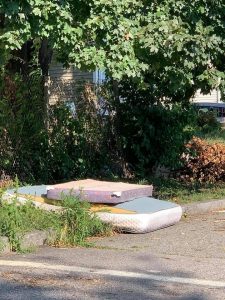
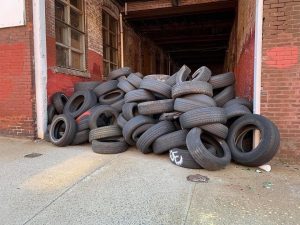
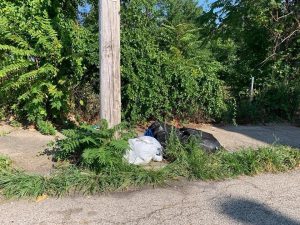
The Department of Public Works is classified as an essential city department and for good reason. The hard work this department performs everyday to keep our streets and sidewalks in good shape, keep trash off of our streets, and our environment safe is vital to the operation of a healthy and prosperous city.
However, this summer we’ve experienced a rampant decline in the quality and frequency of these services due to DPW workers being put on furlough one and two days a week. This decline is of no fault of our hardworking men and women in the DPW, but of the circumstances we are facing due to the above mentioned furloughs.
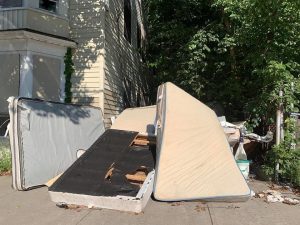
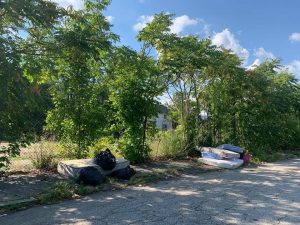
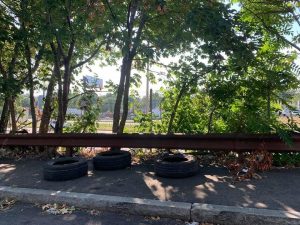
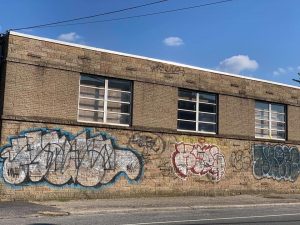
While we understand that the city must find cost-saving measures to preserve the short-term financial stability of the city, we do not think those savings should come at the price of allowing our city to decline into a hazardous eyesore. Graffiti, illegal dumping, rat infestations have become a serious threat this summer to our residents’ quality of life.
Not only are these issues dangerous to our individual and collective health, but they also affect the community’s self-esteem and pride in their neighborhoods and invite further vandalism and destruction.
This is why we, the undersigned, are requesting that the administration end furlough days for workers in the City’s Department of Public Workers and that we wrap our arms around these exponentially growing issues before they get too out of control. We ask that you join us in asking the administration to bring back our essential workers in the DPW by signing the below petition so that we can restore these necessary services in our community.
Sabina Matos, City Council President, Ward 15
Michael Correia, City Council President Pro Tempore, Ward 6
Jo-Ann Ryan, Majority Leader, Ward 5
John J. Igliozzi, Esq., Majority Whip, Ward 7
Nicholas J. Narducci Jr., Senior Deputy Majority Leader, Ward 4
Mary Kay Harris, Deputy Majority Leader, Ward 11
Carmen Castillo, Councilwoman, Ward 9
David Salvatore, Councilor, Ward 14
Nirva Lafortune, Councilwoman, Ward 3
Helen Anthony, Esq., Councilwoman, Ward 2
Kat Kerwin, Councilor, Ward 12
James Taylor, Councilman, Ward 8
Pedro Espinal, Councilman, Ward 10
John Goncalves, Councilman, Ward 1
by Billy Kepner | Jul 17, 2020 | Council News, Press Release, Ward-1, Ward-10, Ward-11, Ward-12, Ward-14, Ward-15, Ward-2, Ward-3, Ward-5, Ward-7, Ward-9
Councilman John Goncalves (Ward 1) and Councilman Pedro Espinal (Ward 10) introduced a resolution at last night’s City Council Meeting calling on the City of Providence to recognize July 18 as Nelson Mandela International Day. The resolution was co-sponsored by Council President Sabina Matos (Ward 15), Majority Leader Jo-Ann Ryan (Ward 5), Majority Whip John J. Igliozzi, Esq. (Ward 7), Deputy Majority Leader Mary Kay Harris (Ward 11), Councilwoman Carmen Castillo (Ward 9), Councilor David A. Salvatore (Ward 14, Councilwoman Nirva LaFortune (Ward 3), Councilwoman Helen Anthony, Esq. (Ward 2), and Councilor Kat Kerwin (Ward 12).
“Nelson Mandela International Day was inspired by President Mandela’s call for the next generation to take on the burden of leadership in addressing the world’s social injustices when he said that ‘it is in your hands now,’ stated Councilman John Goncalves. “Nelson Mandela International Day is more than a celebration of his life and legacy, but it is a global movement to honor his life’s work and to change the world for the better. I believe that those of us in public service should heed that call and all work towards making a better tomorrow for those that come after us. From what we see happening in our own country at this very time, I believe that we can look to the work that President Mandela did and make a real change like he was able to achieve in his lifetime.”
On July 18, 2009 the United Nations declared Nelson Mandela International Day in recognition of the former President of South Africa’s dedication to the creation of a non-racial, non-sexist, and democratic South Africa.
President Mandela was a South African anti-apartheid revolutionary who was imprisoned in 1962 for conspiring to overthrow the anti-apartheid government. He was originally sentenced to life in prison but was released 27 years later. His release came after outcries from world leaders, and due to the civil unrest and the fear of a civil war. For these reasons, President F. W. de Klerk released Mandela in 1990. Together, they worked to negotiate an end to apartheid which resulted in Mr. Mandela being elected the first Black President of South Africa in 1994.
In 1994, Nelson Mandela shared this story, “A friend once asked me how I could reconcile my creed of African nationalism with a belief in dialectical materialism. For me, there was no contradiction, I was first and foremost an African nationalist fighting for our emancipation from minority rule and the right to control our own destiny. But at the same time, South Africa and the African continent were part of the larger world. Our problems, while distinctive and special, were not unique, and a philosophy that placed those problems in an international and historical context of the greater world and the course of history was valuable. I was prepared to use whatever means necessary to speed up the erasure of human prejudice and the end of chauvinistic and violent nationalism.” Time goes on, but still, President Mandela’s words ring true today as they did then.
Mandela served one term as South Africa’s President and left to become a philanthropist who focused on combating poverty and HIV/AIDS through his foundation. In 1993, upon a visit to the United Stated Mandela was awarded one of the United States’ highest honors, the Liberty Medal, by then-President Bill Clinton. The same year he and President F. W. de Klerk were joint recipients of the Nobel Peace Prize.
President Mandela was an ardent supporter of education and education for all. He once stated, “Education is the most powerful weapon which you can use to change the world.” President Mandela died at the age of 95 on December 5, 2013.
Sadly, his youngest daughter, Zindzi Mandela, died at the age of 59 on Monday, July 13, 2020. Ms. Mandela served as South Africa’s ambassador to Denmark.
Nelson Rolihlahla Mandela is world renown for his values and his dedication to the service of humanity, through his work as a humanitarian in the fields of conflict resolution, race relations, promotion and protection of human rights, reconciliation, gender equality and the rights of children and other vulnerable groups, as well as the upliftment of the poor and underdeveloped communities.
“Tomorrow around the world there will be celebrations honoring the extraordinary life and enduring legacy of President Mandela. Let us take a moment here in Providence, especially with all of the division in our world, to come together in unity and solidarity, to reflect and follow in Mandela’s footsteps in advocating for a more peaceful, sustainable and equitable city for all,” stated Councilman John Goncalves.
by Billy Kepner | Jul 16, 2020 | Council News, Press Release, Ward-1, Ward-10, Ward-11, Ward-12, Ward-13, Ward-14, Ward-15, Ward-2, Ward-3, Ward-5, Ward-9
By investing and supporting in structures, programs, and policies that align with the
Just Providence Framework and the City’s Climate Justice Plan
Councilwomen Helen Anthony (Ward 2) and Nirva LaFortune (Ward 3), along with co-sponsors Councilors Rachel Miller (Ward 13), Kat Kerwin (Ward 12), John Goncalves (Ward 1), Pedro Espinal (Ward 10), Council President Sabina Matos (Ward 15), Majority Leader Jo-Ann Ryan (Ward 5), Deputy Majority Leader Mary Kay Harris (Ward 11), Councilwoman Carmen Castillo (Ward 9), and Councilor David A. Salvatore (Ward 14) introduced a resolution at tonight’s City Council meeting calling on the City of Providence to commit to developing an anti-racist institution that prioritizes investment and support structures, that align with the Just Providence Framework and the City’s Climate Justice Plan.
“Climate change impacts our marginalized communities disproportionately, stated Councilor Helen Anthony. The City’s Office of Sustainability in partnership with the Racial and Environmental Justice Committee have done an excellent job creating a plan that addresses the interconnected issues of public health, racism, climate, and environmental sustainability.”
The resolution points out specific markers in history where city leaders repeatedly failed residents of color. Black and Indigenous communities were displaced to build industrial sites, highways, and roads. Schools that serve predominantly students of color lack resources; schools –
Councilwoman Nirva LaFortune stated, “We can not build a just and equitable society without addressing the impacts of climate change on our most vulnerable community members. The Office of Sustainability and the Racial and Environmental committee are committed to working with the community to ensure that climate and sustainability plans recognize the intersection of race and class as an indicator in Environmental Justice assessments. Tonight’s resolution is a movement seeking to rectify policies and structures that failed to acknowledge Black, indigenous and communities of color in climate and other environmental-related initiatives. It is up to all of us to work together to make sustainability and environmental justice a guiding principle in addressing climate change.”
“The Climate Justice Plan is recognized as a national leader and model for community-centered planning, power-shifting, and climate justice. The Office of Sustainability is being tasked with updating existing policies such as zoning, developing new programs such as ‘Green Justice Zones’ in our frontline communities, and creating new policies to help mitigate the climate crisis we are facing, especially in these frontline communities where the crisis is only exacerbating health and economic inequities. As elected officials, it is incumbent on us to support them in this much-needed endeavor,” stated Councilor Rachel Miller.
Tonight’s resolution calls on the City to commit to transforming to an anti-racist institution by following the “Continuum on Becoming an Anti-Racist Multicultural Organization,” to support and invest in structures, programs, and policies that align with the Justice Providence Framework and the Climate Justice Plan.
Councilor Kat Kerwin shared, “Further, this resolution requests that the Office of Sustainability be supported in the FY21 budget so that it may improve the lives of Providence’s BIPOC communities. And that they can continue their work to mitigate long-term climate threats and reduce the loss of life with solutions that result in clean air and water, climate-resistant low-income housing, community health initiatives, environmental justice, youth programs, and economic justice.”
“The time for us to act is now,” stated Councilman John Goncalves. “Our futures depend on the resiliency that we cultivate today so that we may grow a brighter tomorrow for the next generation of all Providence residents. The interconnectedness of climate justice, housing, and economic prosperity for all is dependent on us working together today to address and mitigate the social issues that are caused by an ever-changing climate.”
Finally, the resolution also requests that the City follow the Spectrum of Community Engagement to Ownership outlined in the Climate Justice Plan and move towards a collaborative governance decision-making process that centers those who are most impacted by the current health, environment, and economic crises.
“Our residents and our future residents deserve nothing less,” stated Councilman Pedro Espinal. “The time is now for us to take action, and I believe that we can change the trajectory of our collective history by working together.”