by Billy Kepner | Sep 5, 2019 | Council News, Press Release, Ward-15, Ward-5
The City Council tonight announced initiatives to review the processes and procedures to review the Board of Licenses, and to also set up a working group to address the issues surrounding nightlife that we are facing in Providence.
This Council will be engaging the services of a local law firm to look at the processes and procedures of the Board of Licensees from the top down. In 2016 the Council engaged former Attorney General Jeffrey Pine to do a comprehensive overview, and this is a continuation of that process. In addition, the Council is also pulling together a working group of nightlife business owners, public safety officials, and elected officers to come together to discuss best practices.
The Pine Report, as it has been called, was compiled to assess the Board of Licenses’ adjudication process and to equip the board members with tools for best practices.
Council President Sabina Matos stated, “We must provide a framework for our nightlife businesses to operate with the know-how of how to handle and deescalate issues that might arise at their establishments. Working with Anthony Santurri, a pioneer in Providence’s nightlife scene, the Council believes that we can find solutions to the challenges that our City is currently facing. I commend my colleagues for making real and quantifiable change in our City.”
“As a freshman Councilor I advocated for a balance of opportunities for business owners and the quality of life of our residents,” stated Majority Leader Jo-Ann Ryan. “The Council initiated a complete review of the Board of Licenses and it is apparent to me that we need to do more. With the recent uptick in violence associated around clubs in our City I believe we are ready to revisit these issues. I look forward to working with my colleagues to make changes that benefit businesses and the community alike.”
The Council has been outspoken on its desire to promote a healthy business environment throughout the City, and one that serves the needs of neighborhood residents. More and more there are neighborhood restaurants that are also operating as entertainment venues at night, and the result has been an onslaught of issues affecting the quality of life for residents.
The working group to review nightlife best practices will come together in the coming weeks. It is the Council’s hope to engage as many constituencies as possible.
by Billy Kepner | Sep 5, 2019 | Council News, Press Release, Ward-11, Ward-15, Ward-2, Ward-5
 The Providence City Council voted tonight to authorize the Mayor and the City’s Office of Sustainability to develop and implement an aggregation plan to allow the residents of Providence to have more control over their electric bills.
According to the EPA, Community Choice Aggregation (CCA), also known as municipal aggregation, are programs that allow local governments to procure power on behalf of their residents. CCAs provide communities that want more local control over their electricity sources, more green power than is offered by the default utility, and lower electricity prices.
“With National Grid slated to raise our electricity rates by 8% this fall we need to offer our residents a way to lessen the burden and I believe community aggregation is a step in the right direction,” stated Majority Leader Jo-Ann Ryan (Ward 5). “Residents across the City saw tax increases on their properties, and even on their income taxes, and an 8% increase on our electricity bills adds up. Allowing the City to buy power in bulk, and buy alternate forms of power is not only the right thing to do, it’s the green thing to do. This is one more step in making Providence a carbon-neutral city by 2050!”
Under Rhode Island state law, CCA programs provide the opportunity to bring the benefits of competitive choice of electric supplier, longer-term price stability and more renewable energy options to the residents and businesses of the City of Providence and other municipalities in Rhode Island. The City Council is in full support of this program and the potential monetary and environmental benefits to our community.
Deputy Majority Leader Mary Kay Harris (Ward 11) stated, “My neighbors are worried, they are worried about how are they going to pay their electric bill and keep food on the table. An increase of 8% will harm my neighbors, especially my elderly neighbors who are on a fixed income, and young families. I love the idea that residents will have a choice of a provider and not forced into using one source for their electricity.”
With tonight’s resolution the City Council authorizes the Mayor to engage a consultant with experience in developing and administering CCA programs to assist the City in the creation and operation of an aggregation plan and CCA program provided that the City shall not be required to draw upon the General Fund to compensate such consultant.
“I am very happy to be a co-sponsor of this important piece of legislation,” stated Councilwoman Helen Anthony (Ward 2). “No matter where you live you should be able to have a choice regarding your electric service provider. Many residents want an option to buy electricity that is greener – such as solar or wind generated power – and they should have that option. This is a great step forward in embracing the green economy.”
The Office of Sustainability will provide regular updates to the full City Council regarding the development and implementation of the aggregation plan and CCA program.

by Billy Kepner | Sep 4, 2019 | Council News, Press Release, Ward-3
One of our nation’s most significant challenges has been providing a high-quality public education that serves all children, and this challenge has been particularly acute in our urban communities.
Over decades the Providence Public Schools have invested in changes — new curriculum, new professional development, new schools, new tests — yet has failed to significantly shift outcomes. Close to half of our students perform below proficiency in math and English, and about half of our high school students missed at least 10% of the last school year.
So why has our district, and so many others, under-performed for so long? I would argue that our public education system is built on a foundation of deep, systemic oppression that cannot be addressed with an isolated approach. The structure of public education in the United States has systematically disenfranchised students of color, students with disabilities, students from low-income backgrounds and students who are English language learners. The system that holds the promise of uniting people from diverse communities in an informed democracy has instead sorted students into increasingly divided groups of “haves” and “have-nots.”
As a proud graduate of the Providence public schools and a mother of two children of color in the district, I am ready for change and optimistic about talk of bold action. We need to shake up the entrenched bureaucracy that is holding our schools back. But I am apprehensive about the state taking control of our schools when they lack a demonstrated understanding of our urban communities, their strengths and their needs. For years our state has neglected the urban core, only stepping in for temporary relief without sustainable progress. I know, because I was there.
My parents sent five children through eight Providence public schools, and two of us completed college. As an undocumented immigrant, English language learner, and lead poisoning survivor, study after study suggests I should not be successful. I worked hard, I had parents and teachers who believed in me, and I benefited from resources in and outside of the classroom — programs, people, opportunities — that helped me navigate all kinds of obstacles.
The dire statistics and inspiring mentors are in part what motivated me to study education policy and to run for city council. I am delighted to hear so many voices saying it is time to do right by our schools, but it remains to be seen if we really mean it.
I am already apprehensive about the prospects for real change because plans are being made without the public. The system has systematically failed our kids — my kids — sowing deep mistrust. The way to build enduring change is through a culture that embraces the realities of daily life for our children and families. The way to build enduring change is through transparency and shared trust. The way to build enduring change is by helping students, families and teachers lead.
In example after example nationally, urban district takeovers are top-down, driven by outside experts, and almost universally fail. Separating students, teachers, and families from authority, governance and expertise will limit our success. We have all seen temporary spikes in test scores. The reason our schools continue to fail is that no one has taken the bold step of building long-term community leadership. Providence, with its incredible strengths, could be the first, but only if we set aside short-term political fixes for transparency and true engagement.
Throughout the city, I’ve heard people worry that this process will prioritize politics, not children. They are worried that the plan is being formed behind closed doors.
We cannot deliver a high-quality education for our students if we fail to address the systemic ways that students, families and teachers have been disenfranchised by a public education system that should help them thrive. We should welcome bold action, but not without bold accountability for the people the system serves.
As submitted to the Providence Journal and published online on Wednesday, September 4, 2019

by Billy Kepner | Sep 4, 2019 | Council News, Press Release, Ward-4

Officers Nicholas O’Malley and Shaolin Herr introduce themselves to Councilman and Senior Deputy Majority Leader Nicholas J. Narducci on their beat in Ward 4!
I am thrilled to welcome the members of the Providence Police Department who today began foot patrols in the North End of Providence.
Having a police presence in our community not only helps to discourage crime, but it also allows neighbors to meet the men and women who have sworn to protect them.
As the Councilman that serves the North End, I am very glad to have spent some time today with Officers Nicholas O’Malley and Shaolin Herr. I look forward to seeing them around our neighborhood.
by Billy Kepner | Sep 4, 2019 | Council News, Press Release, Ward-15
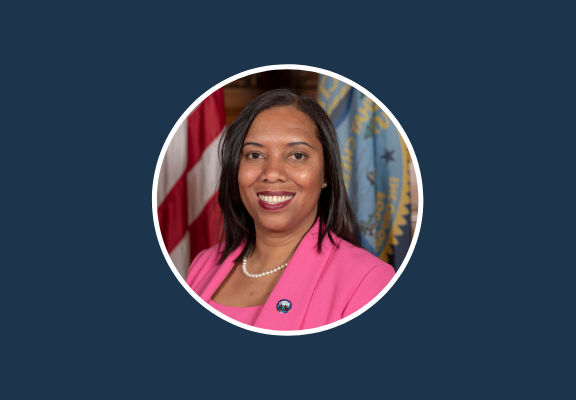
Today, I sent a letter to Commissioner Infante-Green expressing that the City Council would not be issuing any “Show-Cause Materials,” and have instead provided a Notice of Non-Opposition.
Below is a copy of that letter:
September 4, 2019
Angélica Infante-Green, Commissioner
Rhode Island Department of Education
255 Westminster Street
Providence, RI 02903
RE: Notice of Non-Opposition
Dear Commissioner Infante-Green,
I’d like to start off by commending you for the attention you’ve brought our City’s public-school system this summer. As the Commissioner of Education for the entire state, you’ve made our schools a priority and my City Council colleagues and I appreciate that.
This entire process started a few months ago with the devastating John Hopkins report that among other things, detailed the horrific conditions our students and teachers sometimes have to endure in our schools. While it is true that the academic underperformance and the aging condition of our facilities shouldn’t have come to a surprise to anyone, the reported bullying, abuse, lack of supports, and hopelessness shared by staff and students did cause a shock. The school culture across our city is broken and because of this our students and teachers suffer.
This summer I sat in all but one RIDE Community Forum and listened to parent after parent share stories about students getting bullied, students not receiving proper special education services, or that they sat in empty classrooms with no permanent teachers. A lot of these parents shared these experiences with tears streaming down their faces; relieved that this forum finally allowed them a venue to be listened to. I also heard teacher after teacher share their frustrations about an everchanging curriculum, being forced into roles with little professional development, enduring building conditions that are making them sick, and not being supported with the most challenging students in their classrooms.
The raw emotion and pain in all of their voices is indicative of a school system desperately crying out for help. This isn’t a school system that can afford to begrudgingly accept intervention, is one that needs to embrace it fully if it’s going to succeed.
Commissioner, I’m reminded of a quote you kept referring to in all of these meetings: that everyone wants change until change comes. What’s happening in our school system amounts to an emergency or a crisis and we don’t have the luxury of stalling the first responders who are knocking on our door.
I share most of the same concerns as some of my colleagues who have gone on record asking for community input, transparency, and accountability. I also have questions of my own: like who’s on the hook if the district goes over budget? Who’s responsible for raising revenue? Who’s liable in legal matters? Who makes the call for a snow day?
Yet, I’m reminded that this transition won’t be easy and that your office won’t be able to do it all alone. This letter isn’t a letter of objection, but a letter offering the extension of support. How can we as the Council leverage our institutional knowledge and community networks to help this intervention succeed? Do you need help identifying relevant stakeholders? Can we help you develop a metric system that measures success beyond just test scores?
The City Council is determined not to sit on the sidelines throughout this process. This is far too important and these unanswered questions are ones we can help find answers to.
I look forward to our continued dialogue and I am hopeful that by working collaboratively we’ll create a better school system deserving of our students and their families.
Sincerely,

Sabina Matos, President
Providence City Council
Councilwoman – Ward 15
by Billy Kepner | Sep 4, 2019 | Council News, Press Release, Uncategorized
Council Non-Opposition Order