by Council Staff | Jul 16, 2026 | Add Council Logo, Council News, Housing, Jill Davidson, Juan M. Pichardo, Juan Pichardo, Press Release, Rachel Miller
Providence, RI – At tonight’s City Council meeting, councilors passed several major ordinances before recessing for the summer. The next regular City Council meeting will convene on September 17, 2026.
The first ordinance, the Providence 8 Law Qualifications, governs how Providence grants the 8% tax treatment within the city. The 8 Law ordinance will stop the misuse of the low-income tax treatment by wealthy developers who do not substantively build the affordable housing that the state’s 8 Law was meant for. The state’s 8 Law designates the tax treatment for low-income housing, but does not give a definition of low-income, nor specify affordability levels, nor address whether it should be applied to the units themselves or the entirety of the building. This ambiguity creates space for municipalities to administer the program as they deem appropriate and beneficial.
In April 2024, the City Council passed by a 13-2 vote an 8 Law ordinance that would have applied the low-income tax treatment only to the restricted units themselves. The ordinance was then vetoed by Mayor Brett Smiley. Rather than just applying to individual units, the new version passed for the second and final time tonight sets affordability thresholds that work with other low-income housing programs. After taking into consideration feedback from affordable housing developers, the sponsors created an ordinance that will fulfill the intended purpose of the state 8 Law while aligning eligibility with the federal Low-Income Housing Tax Credit and other affordability programs, together ensuring that the tax treatment is only used for properties with meaningful low-income housing.
“After years of work, tonight we put into law that a tax treatment intended for low-income housing must actually be used for low-income housing,” said Council President Rachel Miller (Ward 13). “Wealthy developers have been taking advantage of the City’s most generous tax treatment without providing units affordable to low-income residents. Take 68 Dorrance, for example: a 44-unit market-rate building where only 9 units are income-restricted, and none are restricted for low-income households. Tonight, the Council said clearly: that is not what 8 Law is for. This ordinance protects affordable housing and city revenue by making sure luxury developers pay their fair share.”
Passage of this ordinance is considered to be a major legislative success for the majority of the City Council that has worked on 8 Law reform for the entirety of this term. Besides legislating to end the abuse of the low-income tax treatment, the City Council has pursued a judicial route to properly applying 8 Law. The Council currently has a case before the Rhode Island Supreme Court regarding Buff Chase’s firm Cornish Associates, who have a deal to receive the low-income tax treatment on10 buildings, including commercial portions, without meaningful affordability restrictions.
Councilors also passed for a second and final time an ordinance modernizing procurement procedures for the Providence Public School District (PPSD).
The ordinance, introduced by Councilor Jill S. Davidson (Ward 2), will establish a tiered procurement framework for PPSD following the district’s return to local control. Currently, purchases above $10,000 for supplies and $20,000 for construction are required to go before the Board of Contract and Supply (BOCS). Under the new system, routine purchases, which constitute the majority of procurement activity, would be handled by the schools themselves, and only multi-year, sole-source, or $500K+ contracts would be subject to City review.
“Sometimes multiple levels of review are essential to ensure good governance and financial oversight, but for most routine purchases it just isn’t a good use of taxpayer dollars or city time to have so many levels of red tape,” said Councilor Davidson. “The City is committed to setting our schools up for success this fall, and making sure they get the supplies they need in a timely fashion is a great start.”
The ordinance came via agreement between Councilor Davidson, Mayor Smiley, and School Board President Ty’Relle Stephens, announced in June.
Councilors also passed for the second and final time the BUILD Act, which will eliminate taxation during the construction period of qualifying affordable housing development, in a move that sponsors say will reduce a barrier to increasing the supply of affordable housing in Providence.
Currently, 8 Law only goes into effect upon the occupancy of rental units since the tax treatment is determined by rental income. In between the start of construction and occupancy, properties are taxed at the regular rate.
The BUILD Act will change that by providing a two-year tax stabilization period for eligible affordable development projects before tenants move in and are taxed at 8% of scheduled rental income. By removing the tax burden from the start, the BUILD Act will clear a difficult barrier to the construction of more affordable housing, especially the deeply affordable housing needed by the lowest income households.
Finally, councilors granted second and final passage to an ordinance on deed protections. The ordinance creates a de facto fraud alert system that will notify enrolled property owners whenever a document affecting their deed or title is submitted for recording.
“Protecting Providence homeowners from the devastating impact of home deed fraud has been a personal mission of mine since my time in the State Senate,” said City Council President Pro Tempore and lead ordinance sponsor Juan M. Pichardo (Ward 9). “This ordinance establishes a crucial line of defense, ensuring homeowners are no longer left in the dark about unauthorized changes to their property records that could impact their most important lifetime asset. We are delivering peace of mind and proactive security directly to our neighborhoods.”
In June 2026, Governor Dan McKee signed House Bill 7551aa and Senate Bill 2715A into law, establishing real estate title fraud as a criminal offence and allowing municipalities to refuse to record suspicious documents from unauthorized submitters. Providence’s ordinance will become effective a year ahead of the state law.
The ordinances will now be transmitted to Mayor Smiley for his signature.
by Council Staff | Jan 22, 2026 | Add Council Logo, Council News, Jo-Ann Ryan, John Goncalves, Juan M. Pichardo, Press Release, Rachel Miller
Providence, RI — Tonight, a majority of the City Council formally introduced the highly anticipated rent stabilization ordinance. This proposal was announced at an event on Tuesday, January 20th, with Council President Rachel Miller (Ward 13) and President Pro Tempore Juan M. Pichardo (Ward 9), other sponsoring councilors, landlords, renters, and housing advocates. Together, they emphasized the urgent need for this policy proposal. The ordinance was referred to the Special Committee on Health, Opportunity, Prosperity, and Education (HOPE), where there will be a robust public process including considerable opportunity for public input.
Just days after Brown University students returned to campus for the first time since December’s tragic shooting, councilors unanimously approved a resolution recognizing the countless first responders and community members who supported distressed students and neighbors during and after the attack. The heroic, generous efforts of the Providence Police Department, Brown University Department of Public Safety, RIPTA bus drivers, Brown staff, mutual aid networks, and others helped our community navigate this unprecedented tragedy with care and grace.
In addition, councilors unanimously approved a resolution supporting General Assembly legislation to raise the maximum reimbursement from PILOT aid from 27% to 30%, bringing much-needed revenue to the City following last year’s court settlement on school funding. The resolution was introduced by Councilman John Goncalves (Ward 1).
Councilman Goncalves also introduced a resolution urging passage of the 2026 Save RIPTA Legislative package in response to a $10 million budget deficit that affected 45 of the system’s 63 routes and reduced overall service by 15%. If enacted, the package would support the long-term health of the bus system and those who depend on it by providing reliable funding avenues and addressing capital improvement issues. The resolution was referred to the Committee on State Legislative Affairs.
The Council approved a resolution from Councilwoman Jo-Ann Ryan (Ward 5) establishing the Special Commission on the History of the Providence City Council. The commission will be tasked with the preservation of the Council’s institutional, legislative, and structural history, and with assembling and organizing records of the Council’s past actions, development, operation and governance practices to ensure their accessibility to the public and to current and future City leaders.
Rent Stabilization
Providence has the fastest rent growth in the country, even while the national median rent decreased. The median rent in Providence is 40% higher today than it was in 2020. Rising costs have forced working families out of the city and have directly contributed to rising rates of homelessness. Since March 2020, Providence has experienced more than 24,000 evictions. Between 2023 and 2024, Rhode Island experienced a 35% rise in homelessness, the second-highest increase in the country.
Sponsoring councilors developed the ordinance in order to create stability and predictability for Providence renters while supporting a healthy housing market. It allows owners of covered properties to raise rents up to 4% annually, includes exceptions for major tax increases and substantial capital improvements, provides for exemptions for a variety of properties including new construction and small owner-occupied buildings, and establishes a Rent Board to enforce tenant protections, grant exemptions to property owners, and resolve disputes. The ordinance is a balanced, Providence-specific approach—one that stabilizes housing for Providence families while ensuring property owners achieve a fair rate of return.
“Providence renters are cost-burdened—we are the least affordable city for renters in the country. We have to act now to create some stability for Providence families,” said Council President Miller. “This ordinance takes immediate action to give residents the breathing room they need. It stabilizes costs, slows a runaway rent pricing problem that will not regulate itself, and prevents our residents from being forced out of our city, all without slowing growth.”
Notable features of the Providence Rent Stabilization Ordinance include:
- Caps annual rent increases at 4%. A landlord cannot raise the rent by more than 4%, absent a special circumstance, in any 12-month period.
- Sets base rent as the rent charged 180 days before the ordinance takes effect, preventing last-minute price spikes before the law goes into force.
- Establishes a Rent Board to administer and enforce the rules. This five-member board and their staff will review landlord petitions for larger increases, hear tenant complaints, and ensure the ordinance is followed fairly.
- Tenants can report suspected violations and are protected from any landlord retaliation for exercising their rights. The Rent Board can roll back unlawful rent hikes, order landlords to refund overcharged rent, and the City can levy fines for serious violations.
- Exemptions for small, owner-occupied buildings with one to three units, such as duplexes and triple-deckers where the owner lives on-site. A narrow exemption for one additional small property owned by the same individual (not a corporation).
- A 15-year exemption for new construction, including currently existing buildings, to ensure that rent stabilization does not interfere with housing production or financing.
- Built-in flexibility for landlords to address major expenses. Owners can seek approval for a higher rent increase if they make significant capital improvements or have other special circumstances where a larger increase is necessary to ensure they can earn a fair return.
- Automatic flexibility for large property tax increases, allowing landlords to pass on a fair portion of unusually high tax hikes above a 5% threshold using a clear formula.
- Rent can only be increased one time by 4% when a tenant moves out and a new tenant moves in, maintaining stability through vacancies.
- Complaint-based enforcement, allowing tenants to report violations without creating a large new bureaucracy or annual reporting burden on property owners.
- Utility charges must reflect actual costs, ensuring that landlords may only pass through the real price of utilities and not mark them up.
- Properties must be up to code to qualify for annual rent increases, meaning landlords must maintain safe, habitable buildings in order to apply the standard 4% increase.
Since the start of the term in 2023, the City Council has invested $55 million in the City’s Affordable Housing Trust Fund, overhauled the City’s zoning policy to increase density citywide, and incentivized private development through tax stabilization agreements. These policies have brought hundreds of housing units to the City—in both deeply affordable income restricted developments and market rate new construction. The Council has also increased annual budget allocations to the City’s home repair program that provides forgivable no cost loans to residents to maintain their properties and made a one-time $3 million allocation to the program with American Rescue Plan dollars.
Last year, the Council’s Housing Crisis Task Force concluded a two-year investigation into the issues residents—including those at risk of homelessness—face in finding and keeping stable housing with the release of an extensive report, which included rent stabilization among its recommendations.
For answers to commonly asked questions, the councilors sponsoring the ordinance have put together an FAQ, which will be updated on the City Council’s website at council.providenceri.gov/housinghub/rentstabilizationfaq/. You can also read Council President Miller’s opinion piece in The Boston Globe from January 20th on how rent stabilization could help solve Providence’s housing crisis.
by Council Staff | Jan 21, 2026 | Add Council Logo, Council News, Housing, Juan M. Pichardo, Press Release, Rachel Miller
City Council President Rachel Miller and President Pro Tempore Juan M. Pichardo are set to introduce an ordinance that allows for reasonable annual rent increases while exempting small owner-occupant landlords
Providence, RI – Today in Providence’s Elmwood neighborhood, Providence City Council President Rachel Miller and President Pro Tempore Juan M. Pichardo announced the introduction of a highly anticipated rent stabilization, joined by a large crowd of community members.
“Providence renters are cost-burdened—we are the least affordable city for renters in the country. We have to act now to create some stability for Providence families,” said Council President Miller. “This ordinance takes immediate action to give residents the breathing room they need. It stabilizes costs, slows a runaway rent pricing problem that will not regulate itself, and prevents our residents from being forced out of our city, all without slowing growth.”
The ordinance will create stability and predictability for Providence renters while supporting a healthy housing market. It allows owners of covered properties to raise rents up to 4% annually, includes exceptions for major tax increases and substantial capital improvements, provides for exemptions for a variety of properties including new construction and small owner-occupied buildings, and establishes a Rent Board to enforce tenant protections, grant exemptions to property owners, and resolve disputes. The ordinance is a balanced, Providence-specific approach—one that stabilizes housing for Providence families while ensuring property owners achieve a fair rate of return.
“Most small, local landlords already try to keep rents reasonable and tenants stable,” said Gabe Long, owner-occupant and local landlord. “This ordinance reflects that reality. It sets clear rules, allows flexibility for real costs, and protects renters from extreme hikes, while still making it possible to keep our buildings safe. It gets the balance right, and it makes clear that this housing should be about stability for communities, not profit-maximizing for large corporate landlords.”
Providence has the fastest rent growth in the country, even while the national median rent decreased. The median rent in Providence is 40% higher today than it was in 2020. Rising costs have forced working families out of the city and have directly contributed to rising rates of homelessness. Since March 2020, Providence has experienced more than 24,000 evictions. Between 2023 and 2024, Rhode Island experienced a 35% rise in homelessness, the second-highest increase in the country.
“Rent stabilization is about keeping Providence livable for the people who call it home,” said President Pro Tempore Juan M. Pichardo. “It brings predictability and fairness to a chaotic housing market by putting an end to excessive rent hikes and creating enforceable guardrails on a market that has been out of control for too long. This is a commonsense, Providence-specific approach that protects working families. It gives large property owners a simple path to seek exemptions as necessary, ensuring continued investment in maintenance and repair. And it recognizes that small, local landlords by and large already operate in the framework envisioned by the ordinance—making modest annual rent adjustments to increase costs.”
Councilors point to the introduction of the rent stabilization as the next step in a three-pronged housing strategy—increase the supply of housing at all income-levels, protect the existing housing stock, and stabilize rent prices.
Since the start of the term in 2023, the City Council has invested $55 million in the City’s Affordable Housing Trust Fund, overhauled the City’s zoning policy to increase density citywide, and incentivized private development through tax stabilization agreements. These policies have brought hundreds of housing units to the City—in both deeply affordable income restricted developments and market rate new construction. The Council has also increased annual budget allocations to the City’s home repair program that provides forgivable no cost loans to residents to maintain their properties and made a one-time $3 million allocation to the program with American Rescue Plan dollars.
“Decades of research on housing markets and displacement show that predictable rent increases help families maintain stability and remain in their homes,” said Dr. Eric Hirsch, Professor of Sociology at Providence College. “The market alone has clearly failed to provide meaningful affordability, making public intervention necessary. By establishing clear limits, thoughtful exemptions, and a strong enforcement structure, Providence’s rent stabilization ordinance aligns evidence-based policy with local conditions, giving residents the ability to plan for their futures while supporting a functioning rental market.”
Last year, the Council’s Housing Crisis Task Force concluded a two-year investigation into the issues residents—including those at risk of homelessness—face in finding and keeping stable housing with the release of an extensive report, which included rent stabilization among its recommendations.
The ordinance will be formally introduced at the regular meeting of the City Council at 6 p.m. on Thursday, January 22nd. It will be referred to committee, where there will be a robust public process including considerable opportunity for public input.
Notable features of the Providence Rent Stabilization Ordinance include:
- Caps annual rent increases at 4%. A landlord cannot raise the rent by more than 4%, absent a special circumstance, in any 12-month period.
- Sets base rent as the rent charged 180 days before the ordinance takes effect, preventing last-minute price spikes before the law goes into force.
- Establishes a Rent Board to administer and enforce the rules. This five-member board and their staff will review landlord petitions for larger increases, hear tenant complaints, and ensure the ordinance is followed fairly.
- Tenants can report suspected violations and are protected from any landlord retaliation for exercising their rights. The Rent Board can roll back unlawful rent hikes, order landlords to refund overcharged rent, and the City can levy fines for serious violations.
- Exemptions for small, owner-occupied buildings with one to three units, such as duplexes and triple-deckers where the owner lives on-site. A narrow exemption for one additional small property owned by the same individual (not a corporation).
- A 15-year exemption for new construction, including currently existing buildings, to ensure that rent stabilization does not interfere with housing production or financing.
- Built-in flexibility for landlords to address major expenses. Owners can seek approval for a higher rent increase if they make significant capital improvements or have other special circumstances where a larger increase is necessary to ensure they can earn a fair return.
- Automatic flexibility for large property tax increases, allowing landlords to pass on a fair portion of unusually high tax hikes above a 5% threshold using a clear formula.
- Rent can only be increased one time by 4% when a tenant moves out and a new tenant moves in, maintaining stability through vacancies.
- Complaint-based enforcement, allowing tenants to report violations without creating a large new bureaucracy or annual reporting burden on property owners.
- Utility charges must reflect actual costs, ensuring that landlords may only pass through the real price of utilities and not mark them up.
- Properties must be up to code to qualify for annual rent increases, meaning landlords must maintain safe, habitable buildings in order to apply the standard 4% increase.
For answers to commonly asked questions, the councilors sponsoring the ordinance have put together an FAQ, which will be updated on the City Council’s website at council.providenceri.gov/housinghub/rentstabilizationfaq/.
———————————————————–
Concejales de Providence proponen estabilización de renta para mantener a las familias en sus hogares
La Presidenta del Concejo Rachel Miller y el Presidente Pro Tempore Juan M. Pichardo presentarán una ordenanza que limita los aumentos de renta cada año, mientras no aplica a propietarios locales que viven en sus edificios.
Providence, RI – Hoy, en el vecindario de Elmwood, miembros del Concejo Municipal de Providence la Presidenta del Concejo Rachel Miller y el Presidente Pro Tempore Juan M. Pichardo anunciaron la introducción de una esperada propuesta de estabilización de renta, acompañados por una gran cantidad de residentes de la comunidad.
“Los inquilinos de Providence están sobrecargados por los altos costos — somos la ciudad menos asequible para los que alquilan en todo el país. Tenemos que actuar ahora para darles a las familias algo de estabilidad,” dijo la Presidenta del Concejo Rachel Miller. Esta ordenanza estabiliza los costos, frena un aumento descontrolado de las rentas y evita que nuestros residentes se vean obligados a abandonar la ciudad, todo sin frenar el crecimiento de nueva construcción.”
Esta propuesta busca dar estabilidad a los inquilinos, mientras mantiene un mercado de vivienda saludable. Para las propiedades a las que aplica esta ordenanza, se permiten aumentos de renta de hasta un 4% al año, con excepciones para incrementos grandes de impuestos y mejoras importantes a los edificios. Quedan fuera ciertos tipos de propiedades, como construcciones nuevas y edificios pequeños donde el propietario vive allí. Además, se establece una Comisión de Renta para supervisar el cumplimiento de la ley, resolver disputas, proteger a los residentes que alquilan y a los propietarios, así como permitir excepciones en casos específicos. Es un enfoque balanceado, diseñado específicamente para Providence.
“La mayoría de los propietarios locales ya mantienen las rentas razonables,” dijo Gabe Long, propietario que vive en su edificio. “Esta ley pone reglas claras, permite flexibilidad cuando hay costos reales, y protege a los inquilinos de aumentos extremos, mientras garantizando que los edificios se mantengan seguros y habitables. Este enfoque logra un equilibrio adecuado: protege la estabilidad de las comunidades, y deja claro que la vivienda debe enfocarse en el bienestar de los vecinos, y no en maximizar ganancias para grandes corporaciones.”
Providence tiene el crecimiento de renta más rápido del país, mientras que la renta promedio nacional ha disminuido. Hoy, la renta promedio en la ciudad es un 40% más alta que en 2020, lo que ha obligado a muchas familias trabajadoras a mudarse y ha contribuido al aumento de las personas sin hogar. Desde marzo de 2020, se han registrado más de 24,000 desalojos forzados, y entre 2023 y 2024, la cantidad de personas sin hogar en Rhode Island creció un 35%, el segundo mayor incremento del país.
“La estabilización de la renta se trata de mantener Providence habitable para las personas que lo llaman su hogar,” dijo el Presidente Pro Tempore Juan M. Pichardo. “Brinda estabilidad y justicia a un mercado de vivienda caótico, poniendo fin a los aumentos excesivos de renta y estableciendo límites claros en un mercado que ha estado fuera de control por demasiado tiempo. Es un enfoque de sentido común, adaptado específicamente a Providence, que protege a las familias trabajadoras. Además, ofrece a los grandes propietarios un camino sencillo para solicitar excepciones cuando sea necesario, garantizando que se siga invirtiendo en mantenimiento y reparaciones. Reconoce, asimismo, que los propietarios locales, en general, ya operan de manera similar a lo que propone esta ordenanza, haciendo ajustes anuales modestos en las rentas.”
Los concejales señalan que la introducción de la estabilización de rentas es el siguiente paso dentro de una estrategia de vivienda en tres frentes: aumentar la oferta de viviendas para todos los niveles de ingresos, proteger el inventario de viviendas existente y estabilizar los precios de renta.
Desde 2023, el Concejo Municipal ha invertido 55 millones de dólares en el Fondo de Viviendas Asequible de la ciudad, ha reformado las políticas de zonificación para aumentar la densidad en toda la ciudad y ha incentivado el desarrollo privado mediante acuerdos de estabilización de impuestos. Estas políticas han traído cientos de unidades de viviendas a la ciudad, tanto en proyectos de vivienda profundamente asequible como en construcciones nuevas a precio de mercado. El Concejo también ha incrementado los fondos anuales para el programa de reparación de viviendas, que otorga préstamos perdonables sin costo a los residentes para mantener sus propiedades, y ha hecho una asignación única de 3 millones de dólares al programa con fondos del American Rescue Plan.
“Décadas de investigaciones sobre los mercados de vivienda y el desplazamiento muestran que aumentos de renta predecibles ayudan a las familias a mantener estabilidad y a permanecer en sus hogares,” dijo el Dr. Eric Hirsch, profesor de Sociología en Providence College. “El mercado por sí solo claramente ha fallado en ofrecer una verdadera asequibilidad, por lo que la intervención pública es necesaria. Al establecer límites claros, excepciones bien pensadas y un sistema de cumplimiento sólido, la ordenanza de estabilización de rentas de Providence aplica políticas basadas en evidencia a nuestra realidad local, dando a los residentes la posibilidad de planificar su futuro mientras se mantiene un mercado de alquiler funcional.”
El año pasado, el Grupo de Trabajo sobre la Crisis de Vivienda del Concejo completó una investigación de dos años sobre los problemas que enfrentan los residentes —incluyendo quienes están en riesgo de quedarse sin hogar— para encontrar y mantener una vivienda estable, y publicó un extenso informe que incluyó la estabilización de rentas entre sus recomendaciones.
La ordenanza será presentada oficialmente en la reunión del Concejo Municipal el jueves 22 de enero a las 6:00 p.m. Luego pasará a comité, donde habrá un proceso público con muchas oportunidades para que la comunidad participe.
Puntos clave de la Ordenanza de Estabilización de Renta:
- La renta no puede subir más de 4% en 12 meses, excepto en casos especiales.
- Establece la renta base como la renta cobrada 180 días antes de que la ordenanza entre en efecto, evitando aumentos de último minuto.
- Crea una Comisión de Renta para administrar y hacer cumplir la ley. Sus cinco miembros y su personal revisarán las solicitudes de aumentos mayores por parte de los propietarios, atenderán quejas de los inquilinos y se asegurarán de que la ordenanza se cumpla de manera justa.
- Los inquilinos pueden reportar violaciones sin temor a acciones en su contra de los propietarios. La Comisión de Renta puede revertir aumentos ilegales, ordenar reembolsos por renta cobrada en exceso y la ciudad puede imponer multas por infracciones graves.
- Exenciones para edificios pequeños ocupados por sus dueños, de una a tres unidades, como dúplex o triple-deckers donde el dueño vive en la propiedad.
- También hay una exención limitada para una propiedad adicional pequeña del mismo propietario (no corporativa).
- Exención de 15 años para construcciones nuevas, incluidas las existentes, para asegurar que la estabilización de rentas no interfiera con la producción o financiación de viviendas.
- Flexibilidad incorporada para que los propietarios puedan cubrir gastos importantes. Los propietarios pueden solicitar un aumento mayor si realizan mejoras de capital significativas u otras circunstancias especiales que hagan necesario un incremento más alto para obtener un retorno justo.
- Flexibilidad automática para grandes aumentos de impuestos a la propiedad, permitiendo que los propietarios trasladen una parte justa de incrementos por encima del 5% utilizando una fórmula clara.
- La renta solo puede incrementarse una vez en 4% cuando un inquilino se muda y entra uno nuevo, manteniendo estabilidad durante los cambios de ocupante.
- Permitiendo a los inquilinos reportar violaciones sin crear una gran burocracia nueva ni cargas anuales para los propietarios.
- Los cargos por servicios públicos deben reflejar el costo real, evitando que los propietarios los aumenten por encima del precio pagado.
- Las propiedades deben cumplir con el código de construcción para calificar para los aumentos anuales, asegurando que los edificios sean seguros y habitables antes de aplicar el aumento estándar del 4%.
Para respuestas a preguntas frecuentes, los concejales patrocinadores de la ordenanza han preparado un FAQ, que se actualizará en el sitio web del Concejo Municipal: council.providenceri.gov/housinghub/rentstabilizationfaq.
by Council Staff | Nov 6, 2025 | Add Council Logo, Council News, Jo-Ann Ryan, Juan M. Pichardo, Mary Kay Harris, Oscar Vargas, Press Release, Shelley Peterson, Sue AnderBois
Today, November 6 at 6PM, Providence City Council will convene for a full meeting in the Council Chamber on the third floor of City Hall. Press and the public are invited to attend.
Councilors will consider second and final passage of amendments to the immigration section of the Community Police Relations Act (CPRA), which prioritize the safety of Providence residents and further prohibit voluntary collaboration between Providence Police and federal immigration authorities. Read the full draft of the proposed changes here.
After being voted out of the Committee on Ordinances with a recommendation to pass on Monday, councilors will vote for the first time on proposed updates to the city’s entertainment regulations to expand opportunities for local artists, businesses, and neighborhoods. The updates ensure the law fairly reflects the current needs and realities of Providence’s vibrant entertainment landscape for the shared benefit of businesses, residents, and the city. The amendments were described in a press release on Monday, which can be found here.
In response to environmental and noise concerns, councilors will also consider second passage of an ordinance, introduced by Councilor Sue AnderBois (Ward 3), banning the use of gas-powered leaf blowers in Providence. City departments would eliminate their usage by 2028, with a total ban within city limits by 2033.
Immediately after the council meeting, President Pro Tempore Juan M. Pichardo will host a Veterans’ Day event featuring a speaking program and local resources available to veterans.
Other notable items being introduced on Thursday include:
- An ordinance introduced by President Pro Tempore Juan M. Pichardo (Ward 9) mandating that property owners be alerted when deeds are altered in light of scams seen nationally.
- An ordinance amendment, introduced by Councilwoman Jo-Ann Ryan (Ward 5), that updates design standards for new developments guided by the Comprehensive Plan and input from an ad hoc design review committee.
- A resolution introduced by Councilwoman Mary Kay Harris (Ward 11) honoring community leader Eugenio Fernandez for his service to healthcare in Providence.
- A resolution introduced by Councilman Oscar Vargas (Ward 15) requesting improved access to overnight parking passes.
- A resolution introduced by Councilwoman Shelley Peterson (Ward 14) requesting a review of curb cuts for city-created accessible street parking.
by Council Staff | Oct 28, 2025 | Add Council Logo, Council News, Juan M. Pichardo, Press Release
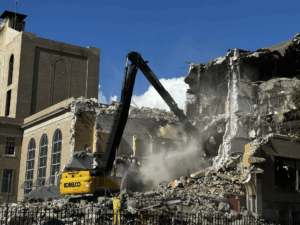
As the demolition of Gilbert Stuart Middle School continues, Council President Pro Tempore Juan M. Pichardo issued the following statement:
In recent months, I have maintained active oversight of the Gilbert Stuart School demolition and reconstruction project, focusing on environmental safety, air quality, and public transparency. I’ve been particularly concerned about dust exposure and limited communication of environmental testing data, which is why I formally requested that Mayor Smiley’s Administration provide detailed documentation of environmental controls, soil testing, and compliance with state environmental standards on August 20. On September 4, I introduced a City Council resolution calling for a temporary pause in demolition until full environmental documentation and monitoring data were made available to the community. I then convened a HOPE Committee meeting on September 17, bringing in Mayor Smiley’s Administration and PPSD officials, to discuss the project’s environmental protocols and documentation. The Administration has since provided formal documentation related to demolition and abatement, including the asbestos plan, demolition schedule, and haul route communications. However there has been limited documentation of air quality and soil testing, despite repeated requests for many weeks.
While environmental teams have implemented dust suppression measures, the recent breakdown of the pump feeding the primary misting nozzles—a key dust-control device—exposes an unacceptable risk to public health. I visited the site this week and saw firsthand inadequate usage of water hoses. I learned that the work was continuing despite the breakdown of the water misting pump. The reliance on a single vulnerable system is insufficient. I remain concerned about the inadequacy of real-time communication and accountability mechanisms. I am calling on the Administration to immediately share air- and soil-quality data publicly, enact stronger verification of environmental monitoring, and establish clear notification protocols if dust or particulate levels exceed safe thresholds. I want to be clear that only official environmental reports and not informal verbal or email updates should serve as the basis for assuring the public that conditions are safe. We need to go above and beyond basic safety protocols to protect our community, ensuring that the operational convenience of the contractor does not supersede the health and safety of the neighborhood.
The community expects and deserves constant vigilance, which is why my focus remains on ensuring consistent environmental oversight as demolition proceeds. Before continuing any further with the demolition, the Administration needs to give the community meaningful assurances that their environmental concerns are being taken seriously and addressed. Through continued City Council and School Building Committee review, as well as interagency coordination, I’m seeking to guarantee that the City’s construction and environmental management practices protect residents, schoolchildren, and workers—establishing a clear precedent for environmental diligence across all future school projects.
________________________________________________________________________________________________________________
El Presidente Pro Tempore del Concejo Muncipal Juan M. Pichardo Publica una Declaración Sobre Gilbert Stuart
Mientras continúa la demolición de la escuela secundaria Gilbert Stuart, el Presidente Pro Tempore del Concejo Municipal Juan M. Pichardo publicó la siguiente declaración:
En los últimos meses, he supervisado cercanamente el proyecto de demolición y reconstrucción de la Escuela Gilbert Stuart, enfocado en la seguridad ambiental, la calidad del aire y la transparencia pública. Me ha preocupado especialmente la exposición al polvo y la limitada comunicación de los datos de las pruebas ambientales, por lo que el 20 de agosto solicité formalmente a la Administración del Alcalde Smiley que proporcionara documentación detallada sobre los controles ambientales, las pruebas de suelo y el cumplimiento de las normas ambientales estatales. El 4 de septiembre, presenté una resolución del Concejo Municipal solicitando una pausa temporal en la demolición hasta que la documentación ambiental completa y los datos de monitoreo estuvieran disponibles para la comunidad. Después alojé una reunión del Comité HOPE el 17 de septiembre, con la participación de la Administración del Alcalde Smiley y funcionarios del PPSD, para discutir los protocolos y la documentación ambiental del proyecto. Desde entonces, la Administración ha proporcionado documentación formal relacionada con la demolición y la eliminación de asbesto, incluyendo el plan de demolición, el cronograma de demolición y las comunicaciones sobre las rutas de transporte. Sin embargo, la documentación sobre la calidad del aire y las pruebas de suelo ha sido limitada, a pesar de las reiteradas solicitudes durante varias semanas.
Mientras los equipos ambientales han implementado medidas de supresión de polvo, la reciente avería de la bomba que alimenta las boquillas de nebulización primarias (un dispositivo clave para el control del polvo) expone un riesgo inaceptable para la salud pública. Visité el sitio esta semana y presencié de primera mano el uso inadecuado de las mangueras de agua. Me enteré de que el trabajo continuaba a pesar de la avería de la bomba de nebulización. Depender de un solo sistema vulnerable es insuficiente. Sigo preocupado por la insuficiencia de los mecanismos de comunicación y rendición de cuentas en tiempo real. Exhorto a la Administración a compartir de inmediato los datos sobre la calidad del aire y el suelo, a implementar una verificación más rigurosa del monitoreo ambiental y a establecer protocolos de notificación claros si los niveles de polvo o partículas superan los límites de seguridad. Quiero dejar claro que solo los informes ambientales oficiales, y no las actualizaciones informales verbales o por correo electrónico, deben servir como base para garantizar al público que las condiciones son seguras. Necesitamos ir más allá de los protocolos básicos de seguridad para proteger a nuestra comunidad, garantizando que la conveniencia operativa del contratista no prevalezca sobre la salud y la seguridad del vecindario.
La comunidad espera y merece una vigilancia constante, por lo que mi enfoque sigue siendo asegurar una supervisión ambiental constante durante la demolición. Antes de continuar con la demolición, la Administración debe brindar a la comunidad garantías significativas de que sus preocupaciones ambientales se toman en serio y se atienden. Mediante la revisión continua del Concejo Municipal y el Comité de Construcción Escolar, así como la coordinación interinstitucional, busco garantizar que las prácticas de construcción y gestión ambiental de la Ciudad protejan a los residentes, los estudiantes y los trabajadores, sentando un precedente claro de diligencia ambiental en todos los proyectos escolares futuros.
by Council Staff | Jun 25, 2025 | Add Council Logo, Juan M. Pichardo, Rachel Miller
Today, in direct response to the brutal and unconstitutional enforcement tactics currently being undertaken by the far-right federal administration, Providence City Council President Rachel Miller announced that a “Know Your Rights” mail piece will be sent to every household in the city with instruction in both English and Spanish about how to respond to immigration enforcement officials. By taking this unprecedented action to protect our immigrant communities, councilors are sending a clear message: every Providence resident has a right to lead a dignified life free from state-sponsored intimidation and terrorization.
“The Providence City Council is partnering with organizations that represent our diverse community to promote safety and inclusion in the face of fear and uncertainty that pervades our city’s immigrant communities due to the reckless cruelty of the Trump administration,” said Council President Miller. “For nearly 400 years, immigrants have been and continue to be vital to Providence. The Council stands together to say immigrants are welcome here and to encourage every member of our community to educate themselves about their constitutional rights and where to find help if they need it.”
The two-sided, 6×11 jumbo postcard was created by the city council in partnership with several local immigrant rights, labor, and advocacy organizations, including:
- Progreso Latino
- Olneyville Neighborhood Association
- New Bridges for Haitian Success (NB4HS)
- Providence Youth Student Movement (PRSYM)
- Unite Here Local 26 Providence
- SEIU 1199 RI
- Rhode Island AFL-CIO
- Alliance of RI Southeast Asians (ARISE)
- Alliance to Mobilize Our Resistance (AMOR)
- Guatemalan Center
- Latino Policy Institute
- International Union of Painters and Allied Trades (IUPAT)
- Quisqueya en Acción
- Center for Justice
- Parents Leading for Educational Equity (PLEE)
The card consists of two sections – in the top section, residents are advised of their constitutional rights with actions to take if an ICE agent comes to their door, for example not to open the door unless officers present a valid warrant signed by a judge. The lower portion of the card can be cut from the whole, kept in a wallet, and presented to immigration enforcement officers when no valid judicial warrant is displayed.
The card also lists no-cost legal assistance helplines, including a 24/7 helpline operated by Dorcas International, supported in part by council-allocated funds, as well as the bilingual Deportation Defense Line of Rhode Island, which alerts trained responders to suspected ICE presence in local communities.
Finally, residents are advised of the free municipal ID cards available to all Providence residents through the “IDPVD” program. More information on this program can be found at www.providenceri.gov/idpvd.
“Providence is a city of immigrants in a nation of immigrants,” said Council President Pro Tempore Juan M. Pichardo. “Nothing is more fundamental to the American experience than the right to live here peacefully and prosperously, regardless of country of origin or documentation status. This mailer will help remind our residents of those rights and of the resources available to our immigrant communities.”
The mailer is currently being processed and should begin arriving at residents’ homes over the next several business days.
El Concejo Anuncia el Envío de una Tarjeta Informativa a Todos los Hogares con Información sobre los Derechos de los Inmigrantes
Hoy, en respuesta directa a las tácticas brutales e inconstitucionales que está utilizando la actual administración federal de extrema derecha, la presidenta del Concejo Municipal de Providence, Rachel Miller, anunció que todos los hogares de la ciudad recibirán por correo una tarjeta informativa titulada “Conozca Sus Derechos”, con instrucciones en inglés y español sobre cómo responder ante la presencia de agentes de inmigración. Con esta acción sin precedentes para proteger a las comunidades inmigrantes, el Concejo Municipal envía un mensaje claro: todas las personas que viven en Providence tienen derecho a vivir con dignidad, sin miedo, y libres de intimidación o terror patrocinado por el Estado.
“El Concejo Municipal de Providence se ha unido a organizaciones que representan a nuestra comunidad diversa para promover la seguridad y la inclusión ante el miedo e inseguridad que viven nuestras comunidades inmigrantes por la crueldad imprudente de la administración de Trump”, dijo la presidenta del Concejo, Rachel Miller. “Durante casi 400 años, los inmigrantes han sido y siguen siendo esenciales para Providence. El Concejo reafirma que las personas inmigrantes son bienvenidas aquí e invita a toda la comunidad a conocer sus derechos constitucionales y dónde buscar ayuda si la necesitan”.
La tarjeta informativa, de gran tamaño (6×11 pulgadas) e impresa por ambos lados, fue diseñada por el Concejo en colaboración con diversas organizaciones locales que trabajan por los derechos de las personas inmigrantes, laborales y comunitarias, entre ellas:
- Progreso Latino
- Asociación Vecinal de Olneyville / Olneyville Neighborhood Association
- New Bridges for Haitian Success (NB4HS) / Nuevos Puentes para el Éxito Haitiano
- Providence Youth Student Movement (PRSYM) / Movimiento Juvenil de Estudiantes de Providence
- Unite Here Local 26 Providence / Sindicato Unite Here Local 26 Providence
- SEIU 1199 RI / Sindicato Internacional de Empleados de Servicios 1199 Rhode Island
- Rhode Island AFL-CIO / Federación Estadounidense del Trabajo y Congreso de Organizaciones Industriales de Rhode Island
- ARISE – Alliance of Rhode Island Southeast Asians for Education / Alianza de Asiáticos del Sudeste de Rhode Island
- AMOR – Alliance to Mobilize Our Resistance / Alianza para Movilizar Nuestra Resistencia
- Guatemalan Center / Centro Guatemalteco
- Latino Policy Institute / Instituto de Políticas Latinas
- International Union of Painters and Allied Trades (IUPAT) / Unión Internacional de Pintores y Oficios Afines
- Quisqueya en Acción
- Center for Justice / Centro de Justicia
- Parents Leading for Educational Equity / Padres Liderando por la Equidad Educativa
La tarjeta tiene dos secciones principales. La parte superior explica los derechos constitucionales que protegen a todas las personas. Ofrece instrucciones claras sobre qué hacer si un agente de inmigración (ICE) llega a la casa, por ejemplo, no abrir la puerta a menos que muestren una orden válida firmada por un juez. La parte inferior se puede recortar y guardar en la cartera. Esta parte puede mostrarse a oficiales si no presentan una orden judicial válida.
También se incluyen números de teléfono gratuitos para asistencia legal, como la línea 24/7 operada por Dorcas International, financiada en parte con fondos del Concejo, y la Línea de Defensa Contra Deportaciones de Rhode Island, bilingüe, que activa una red de respuesta ante la presencia de ICE en la comunidad.
Finalmente, la tarjeta informa sobre el programa municipal IDPVD, que ofrece tarjetas de identificación gratuitas para todos los residentes de Providence, sin importar su estatus migratorio. Más información en: www.providenceri.gov/idpvd.
“Providence es una ciudad de inmigrantes en una nación de inmigrantes”, declaró el presidente pro tempore del Concejo Juan M. Pichardo. “Nada es más esencial para la experiencia estadounidense que el derecho a vivir aquí en paz y prosperidad, sin importar el país de origen ni la documentación. Este folleto ayudará a recordar a nuestros residentes esos derechos y los recursos disponibles para nuestras comunidades inmigrants.”
La tarjeta ya está en proceso de impresión y comenzará a llegar a los hogares en los próximos días laborables.