The City of Providence announced on March 29, 2019 that the state-mandated full real estate property revaluation is complete and real estate property value assessment notices will be mailed on April 15, 2019. At this time, the following 2018 real estate revaluation procedures have been executed: Data Collection of Building Data, Building Permit Inspections, Review Analysis of Sales, Cost and Land Analysis, Income & Expense Review, Commercial Market Rate Analysis, and Table Calculations.
Providence property owners will soon receive a notice (after April 15) advising them of the new appraised value of their real estate property prior to when the new value will officially be added to the tax roll.
What You Will Receive
How To Request A Review
The notice that contains the new appraised value will also explain how to arrange for a personal informal hearing to review the proposed assessment if they so choose. Recipients are asked to follow the instructions on your notice to book an appointment with Vision Government Solutions, Inc. for a hearing on any parcel. Please bring any information to support your request for a change; hearings are by appointment only. You can make an appointment online at www.vgsi.com/schedules or by phone by calling Vision Government Solutions at 1-888-844-4300.
Hearings will begin on April 23, 2019 and end on May 17, 2019 and will be held at either the Fox Point Boys and Girls Club located at 90 Ives Street or the Neutaconkanut Recreation Center located at 675 Plainfield Street.
The Hearing Schedule is as follows:
Monday-Thursday from 10 AM to 6 PM
Friday from 10 AM to 4:30 PM
Saturday, April 27 and May 11 from 10 AM to 4 PM
The notices providing the results of the informal hearing will be mailed no later than May 31, 2019 with final values delivered on June 3, 2019.
Per RI General Law 44-5-11.6, cities and towns are required to perform a statistical update every third and sixth year and a full property revaluation every nine years. Vision Government Solutions uses recent sales and market data to inform their findings.
Property owners should not use the current tax rates when estimating their 2019 tax bill. Once the notices have been mailed, property owners may view their 2018 Data on the Vision Government Solutions website.
Tonight the Providence City Council passed the Retail Plastic Bag Reduction Act for the first time. The bill, as required by the City Charter, needs a second passage before it can become law.
The ordinance will reduce the number of plastic checkout bags distributed by retailers. It is the result of a two-year legislative initiative lead by Council Majority Leader Jo-Ann Ryan (Ward 5) to address this significant environmental and economic issue facing the City.
Ryan said, “Today is a big first-step in making Providence a cleaner and greener city for all to enjoy. I am proud of my council colleagues for supporting this legislation. It sends a message that we are good stewards of our environment and that we are committed to preserving and protecting our natural resources.”
Ryan, the lead sponsor of the ordinance, has visited every corner of the city: toured the RI Resource Recovery facility; met with various environmental groups including Clean Water Action, the Racial and Environmental Justice Committee, Zero Waste Providence; and engaged area business leaders, community stakeholders and colleagues in government. She also testified before the RI Senate in support of similar state legislation.
The ordinance requires that the City present a comprehensive implementation plan within 60 days of passage, along with quarterly progress reports from the City‘s Director of the Office of Sustainability, and will involve a host of community partners to help with education, outreach and implementation.
The legislation calls upon the City to work with its partners such as the Providence School Department, Providence Community Library, Providence Libraries, community organizations, business stakeholders, its waste hauler, vendors and the Rhode Island Resource Recovery Corporation among others as part of a comprehensive education, outreach and implementation plan.
It becomes effective six-month after final passage. During this time, the City’s Office of Sustainability will work to educate residents and business owners on the plastic checkout bag reduction plan. This period will also allow businesses to use their remaining stock of plastic checkout bags.
Ryan continued, “The production, use, and disposal of plastic checkout bags have significant adverse impacts on the environment and are a serious economic burden to the City’s solid waste disposal and single-stream recycling systems. Reducing plastic checkout bags will help to curb litter on our streets and waterways, protect the marine environment, and reduce greenhouse gas emissions. The economic reasons are also significant. The data clearly shows that the City will save at least $1 million each year by removing this common contaminant to our recycling system. This initiative will remove, on an annual basis, an estimated 95 million plastic checkout bags from the landfill.”
Highlights of the ordinance:
All checkout bags must be designed for multiple reuse or be paper. If the checkout bag is plastic, it must be made from 100% recycled plastic. Paper bags must be 100% recyclable and made from at least 40% recycled paper.
It exempts certain types of plastic bags such as dry cleaning or laundry bags, bags used to wrap or contain frozen foods or prevent or contain moisture, etc.
It gives six-months from passage for businesses to become compliant allowing time for education/outreach and for retailers to use existing stock.
It provides an exemption for retailers who may have a hardship determined by the Director of the Office of Sustainability. And provides a warning prior to any fine for non-compliant retailers.
Some facts on the environmental impacts of plastic checkout bags:
Plastic checkout bags are used for a very short time but live for about one thousand years.
Plastic checkout bag production produces over 2.5 thousand metric tons of CO2 (carbon dioxide) annually and contributes to the greenhouse effect and global warming.
Plastic checkout bags end up in the ocean, breaking down into smaller pieces called microplastics, Clean Water Action found a high concentration of these microplastics in the Bay. Microplastic particles from plastic bags pose threats to human health and to the local economy by exposing our food sources to synthetic materials and toxins.
It is estimated that over 95 million plastic checkout bags are used annually in Providence.
Plastic checkout bags account for roughly 60 tons of garbage.
Plastic checkout bags are NOT recyclable in our single stream RIRRC’s recycling facility.
Plastic checkout bags are the cause of contamination of our recycling bins and compromise our recycling program.
The legislation is particularly important for women of color, who are three to four times more likely to die for pregnancy-related reasons than white women.
“Doulas have been shown to make real, measurable improvements in the health outcomes for women and babies during pregnancy and childbirth, preventing complications, and reducing the cesarean and preterm rates. They are cost-effective, ultimately saving medical dollars because patients using them require less medical intervention overall,” said Representative Marcia Ranglin-Vassell (Democrat, District 5, Providence). “All women, but particularly women of color, who are three to four times more likely to die for pregnancy-related reasons than white women, should be encouraged to use a doula during pregnancy and childbirth.”
Doulas are trained professionals who provide continuous physical, emotional and informational support to women during pregnancy, childbirth and the first few postpartum weeks. They assist in making women as comfortable as possible during birth, providing help with breathing techniques, massage and advice, and can help advocate for the woman during the birth. Births assisted by doulas have significantly lower rates of cesarean section, with one study showing a 39 percent reduction.
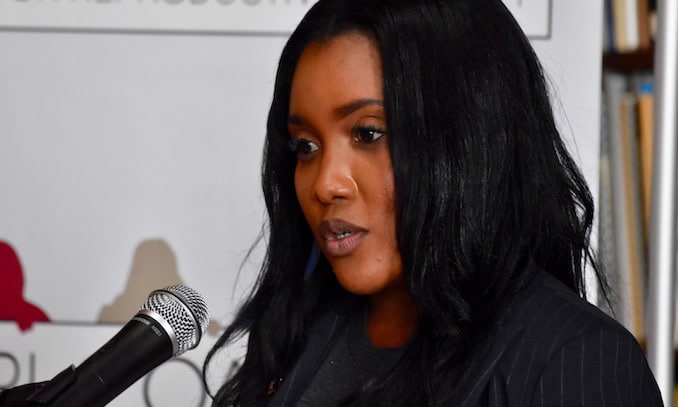
Kavelle Christie
The National Partnership for Women and Families, which has advocated for coverage of doula services for improved health outcomes, estimates the reduction in cesarean births that could result from public and private coverage nationwide could save Medicaid at least $646 million per year, and about $1.73 billion for private insurers.
Aniece Germain
At 23.8 per 100,000 live births in 2014, the United States has the highest maternal mortality rate in the developed world, and, along with Serbia, is one of only two developed nations whose rate has been rising, having increased 26.6 percent between 2000 and 2014.
In Rhode Island, the maternal mortality rate between 2013 and 2017 was 11.2 per 100,000 live births.
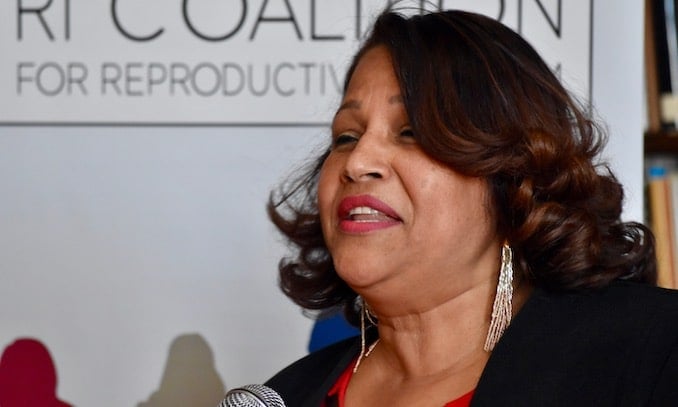
Felicia Love
Nationally, maternal mortality is far higher for black women than white women. According to the Centers for Disease Control, from 2011 to 2014, the mortality rate for black women was 40 per 100,000 births, compared to 12.4 per 100,000 for white women. Studies have suggested that racial bias and unequal treatment of black women exist in the health care system, often resulting in inadequate treatment.
Ana Quezada
Under the bill (H5609), services from a trained, qualified doula would be eligible for coverage through private insurance and Medicaid, including the state medical assistance program, for up to $1,500 per pregnancy. The bill, which would take effect July 1, 2020, would also set industry standards and create a statewide registry of doulas to assist women in connecting with qualified professionals, while simultaneously helping to assure that doulas are fairly compensated for their work.
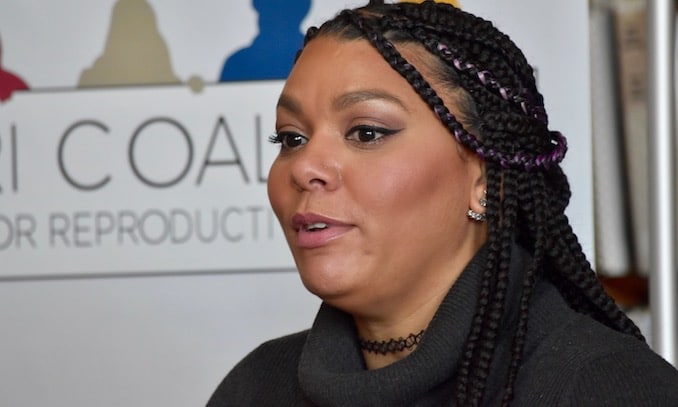
Jennifer Rourke
Currently, Oregon and Minnesota permit Medicaid coverage for doula services and New York City has launched a pilot program.
Companion legislation has been introduced in the Senate by Senator Ana Quezada(Democrat, District 2, Providence). The bill has bipartisan support in the House.
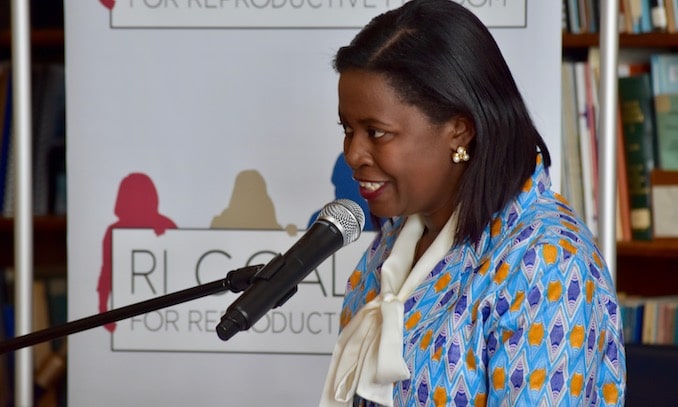
Nirva LaFortune
“Planned Parenthood of Southern New England believes that carrying a pregnancy to term should not put women’s lives at risk. As a member of the Rhode Island Coalition for Reproductive Freedom, we will fight to ensure black women receive the high-quality care they deserve, and perinatal doulas are fairly compensated for the care they provide. Maternal mortality in the United States is a public health crisis and its severe impact on black women is unacceptable,” said Kavelle Christie, Public Policy and Organizing Specialist of Planned Parenthood of Southern New England. “In partnership with SisterSong, leaders in the reproductive justice movement, and Rhode Island social justice and health care organizations with a long history of advocating on behalf of their communities, the Rhode Island Coalition for Reproductive Freedom will work to ensure women of color are seen, heard, and provided the high-quality health care they deserve.”
The bill was announced at what may have been the first press conference held at the Rhode Island State House in which all of the speakers were women of color.
The press conference was emceed by Aniece Germain, president of Hope and Change for Haiti. Hope and Change for Haiti is a member organization of the Rhode Island Coalition for Reproductive Freedom.
“I always think that if I knew of doula services I would have had a different experience when I had my children,” said Germain. “I remember having questions unanswered by fear to look stupid. I remember I fell in the bathroom at the hospital one day after giving birth. I kept asking myself what could have been done to prevent that from happening. Was there anything that could support me? I am sure I was neither the first nor the last black woman experiencing this situation. Having a compassionate doula culturally integrated with me would have made a difference.”
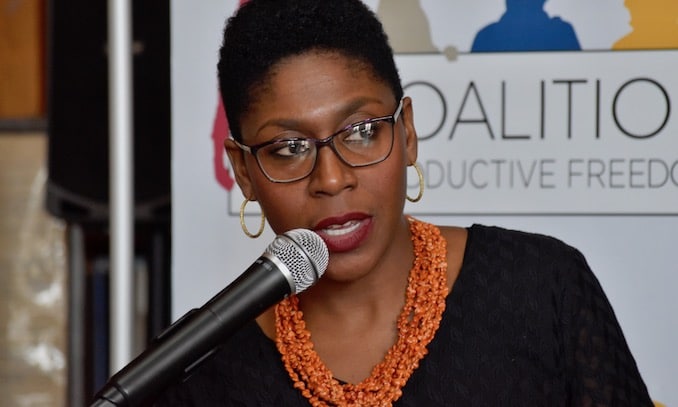
“I had my son in ’97. I was 17 years old. I was a black teen by herself, and I was afraid and I was alone” said Felicia Love, Co-President of Rhode Island Doulas. “I had no idea about doulas. I had no idea about the resources that were available to our community. In 2013 I got pregnant again and I knew I wanted to have a completely different experience. So I did my research, and I found a doula.”
The problem was, Love lacked the money to afford a doula. Eventually a doula offered her services to Love for free.
“A doulas work does come from the heart,” said Love, “but we shouldn’t have to sacrifice our family for other families.” It is important that doulas are adequately compensated for the work they do.
Love became a doula herself because she wanted to give the experience of her second child’s birth to other people.
Senator Quezada didn’t know about doulas until she was asked to introduce the bill in the Senate. Since then, Quezada has educated herself about the importance of doulas.
“That reminded me about a story my mom told me when she had her first baby many years ago in the Dominican Republic“, said Quezada. “When she was pregnant she didn’t know how she was going to have that baby. She thought she was going to throw up and the baby was going to come out. That was her real belief, because she didn’t have anybody around her to support her… She was a very innocent person…
“Then I remember my husband telling me his mom had seven children at home, without care, without medical, without anybody there but her mom… that was in Guatemala.
“As a woman of color, coming to this country and knowing what so many women go through in other countries, it’s very hard for me to not support a bill like this…”
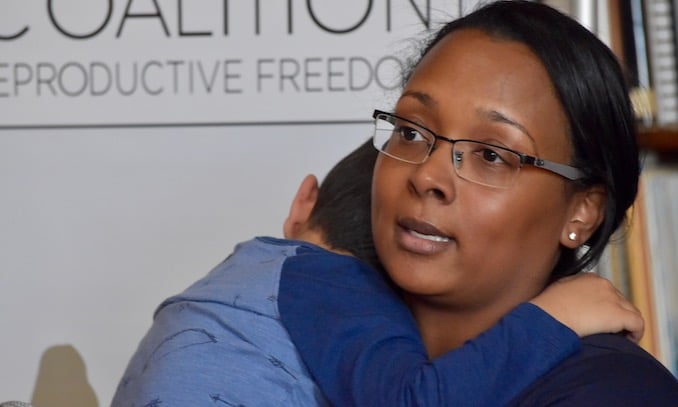
Jennifer Rourke, a member of The Womxn Project, told her harrowing story of having her symptoms ignored after she gave birth before she was finally told, after days of being run around and flirting with death, that she was suffering from post-partum preeclampsia. Rourke is the mother of four children.
“Having someone there to advocate for me would have been fantastic,” said Rourke. “I have private insurance. I actually have the ability to pay for a doula, I just didn’t think I needed it. And I just think back to when I was 16 and I gave birth to my oldest son, and I’m like, what if that was a young girl in the hospital, like me, and she didn’t know what was going on? If she didn’t have someone by her side?
“This bill is so important for some many people, but mainly for black women. Because black women are four times more likely to die giving birth…”
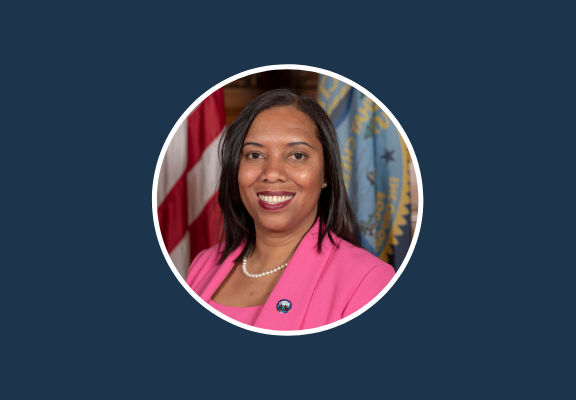
“Motherhood is difficult. Giving birth is traumatic. It’s the closest thing to death,” said Providence City Councilor Nirva LaFortune (Ward 3). “Because when you go into a hospital, a birthing center and you decide to give birth, you’re not sure you’re going to make it out. You hope you will and you also want someone to be there that’s going to support you.”
LaFortune made an important observation during her speech: “Having birthing options and support should not be a privilege, it is a right!”
Reprinted with permission from Steve Ahlquist of UpRiseRI.com
Providence Public School students engaged with Young Voices RI issued a report on Tuesday showing that 49 percent of Providence Public School students, “disagree that teachers handle discipline issues fairly” and 69 percent of students agree that, “adults at my school don’t understand what my life is like outside of school.”
In addition to collecting data over four years from more than 2000 students, the Young Voices RI report, Girls of Color Addressing Disparities in Providence Schools, also uses information collected by the Providence School Department and RI KIDS COUNT.
The report provides quotes from students addressing some issues. For instance, under the heading “Need for academics to be taught in ways that are engaging and relevant to the 21st Century economy” students are quoted as saying:
“If we really want to look at really improving the dropout rate of our schools we have to look at how we are going to engage students in the classroom.”
“We need our classes to be more interactive so students are engaged with their learning.”
Under the heading, “Need for a caring classroom and school environment” students are quoted as saying,
“I haven’t had one teacher throughout my whole freshman year ask me how I was doing. And some teachers still can’t say my name, even though it’s pretty straightforward. One even writes it down wrong, and then marks me absent when I’m always there.”
Students presented the report at an event held in the library of the Rhode Island State House. All the video from that presentation is below:
Xavier Copeland is a 17-year-old resident of Providence, Rhode Island and junior at Classical High School. He is the youth co-chair for Young Voices RI Board of Directors. He is also a contributor to UpriseRI. “I am the first male youth co-chair in over four years and I am very fortunate to have had two strong girls pave the way for me. 80 percent of our boardmembers are female and all of our executive officers are female except me. I am proud an ally to support the development of young women on the board of directors and the organization in general, because an ally doesn’t fight for people. That’s what a savior does. An ally fights with people who are oppressed.”
“We are low-income girls of color that are leading an effort to address the root causes of disparities facing our peers in Providence Public Schools,” said Marie Shabani, the board secretary of Young Voices RI. “We want to make sure girls of color graduate high school, attend college and complete college…
“Being born in a country where women are not allowed to have education, we must fight for women to have an equal education to men. Because when we have women of color graduating, we have a lot more perspective on the table, and we go on to do great things so we can help others in a situation like them.”
Melanie Nunez presented the highlights of the report presented.
“As students we are tired of being frequently asked to do survey work and surveys in general, and have nothing done with the results. we want to actually see our experience improve, instead of just being measured over and over again,” said Nunez.
“When I was [preparing this report] I was a freshman at the time and I didn’t know anything about the State House, Senators, Representatives, anything. But, as the process went on I was able to meet with women of color who had these high positions, like Council President Matos, and it meant a lot to me to see people in power that were women, that were people of color… and I was able to see them see themselves in me, and see what I could potentially be…”
“I grew up in a family that was mostly full of girls… My mother raised her own two sisters because my grandmother was not able to take care of them,” said 14 year-old Jaychele Schneck, a co-chair of the development committee of Young Voices RI and March for Our Lives RI. “So my family has always focused on making sure that we all succeed, making sure we had the resources we need. This lead to me starting my own nonprofit after being bullied in the seventh grade. I started my own nonprofit when I was 12 years old.
“Young Voices has given me the skills to continue my nonprofit, given me the leadership skills in order to make sure my nonprofit is able to succeed…”
“They came to one of our meetings and told us what they wanted to do and I think that they immediately blew a lot of us away with their ideas, their maturity and their poise,” said Beverly Wiley, co-chair of Women’s Fund RI. Women’s Fund RI helped Young Voices RI complete their report.
“When we hear about what’s happening at the schools, in the City Council we have this challenge,” said Providence City Council President Sabina Matos. “I’ve been told to stay in my lane. That I should let the school board do the work and that the City Council should just do its work…
“We have to break those silos that we have,” continued Matos. “And I think you guys can be the ones to call for a joint meeting of the City Council and the School Board…”
“You guys are incredible. You’re awesome. You’re powerful beyond your wildest imagination. Thank you for using your voices,” said Representative Marcia Ranglin-Vassell (Democrat, District 5, Providence), addressing the Young Voices RI students directly. “In a time when women of color and girls of color [when] our voices are often not listened to, they would rather silence us. And a part of that is because they are not used to us. They are not used to us in powerful spaces and places…”
“90 percent of the students [in Providence Public Schools] are students of color,” said Providence City Councilor Katherine Kerwin (Ward 12). They’re facing suspension. They’re facing the impacts of the school-to-prison pipeline…”
Reposted with permission from Steve Ahlquist of UpRiseRI.com
The Providence City Council passed a resolution at last night’s Council Meeting requesting the Director of Public Works to immediately stop the issuance of road opening permits to National Grid and to any affiliated vendors until all city streets and sidewalks are repaired back to their original condition. This resolution is sponsored by Council President Pro Tempore Michael Correia and was passed on a unanimous voice vote.
“National Grid needs to be held accountable for their actions; our roadways are getting torn up, the fines are going unpaid and this neglect must stop,” stated Council President Pro Tempore Michael Correia. “It is simply unacceptable that one of the largest energy companies in the world is burdening our residents with higher costs from work that is being half done. As elected officials, it is our duty to ensure that the City’s infrastructure is maintained in appropriate condition for all those who live, work and visit Providence.”
In order to properly install, repair, and maintain equipment public utilities must occasionally open or excavate roads and sidewalks. When the work is not completed appropriately by public utilities it leaves City streets and sidewalks in poor condition, harming public safety, inconveniencing residents, and lowering the quality of life in the community. This resolution requests the City Solicitors Office file an official complaint with the Public Utilities Commission regarding National Grid’s work and that any outstanding fines owed to the City be paid in full.
In 2016, the National Resources Network (NRN) Strategic Fiscal & Management Plan for the City of Providence found a large backlog of sidewalk repair applications and estimated it would cost $90 million to repair the City’s sidewalks. The report also stated that strengthening the City’s capital infrastructure, such as roads and sidewalks, would “provide the foundation for stronger neighborhoods, improved quality of life of residents, and increased economic attractiveness and competitiveness for employers.” The American Society of Civil Engineers’ 2017 Infrastructure Report Card states that 54% of Rhode Island’s public roads were rated as in “poor condition” and Rhode Island’s drivers face costs of more than $800 per year from driving on roads in need of repair.
Copies of this resolution were sent to the Director of Public Works, the City Solicitor, National Grid, and the Public Utilities Commission. It can also be found no the Open Meetings Portal here: National Grid.