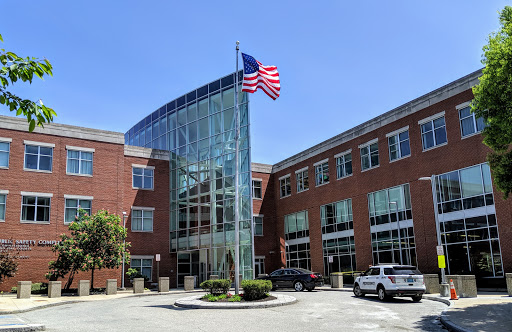
by Council Staff | Jul 24, 2025 | Add Council Logo
Tonight, the Providence City Council convened for the final regularly scheduled meeting before the August recess and advanced several major wins for city residents.
For the second time in two years, councilors defeated a lease proposed by the mayor which would have seen the historic, city-owned Carl G. Lauro building handed over to Excel Academy, a North Providence charter school recently granted an expansion of charter seats by the Rhode Island Department of Education. Yesterday, Council President Rachel Miller, who represents the area surrounding the property, shared a statement explaining her opposition to the proposed lease.
“Mayor Smiley’s lease proposal attempted to solve two challenges at once – ensuring Providence students with already assigned charter seats have a suitable place to learn and finding a path forward for a vacant historic building,” Council President Miller explained in the statement. “After careful consideration, I’ve determined that such an arrangement would not be in the best interest of the neighborhood or city. The city council will not hand the keys of a shuttered public school building to a charter school.”
Council President Miller concluded her statement with both a commitment to stewarding this building and to Providence students, saying, “We need to ensure that our public spaces are utilized in ways that reflect the needs of surrounding communities. I will work closely with my neighborhood and our partners to find a solution for this building that is beneficial to Federal Hill. Every Providence student deserves equal access to quality education, and this council remains committed to ensuring our city’s public schools are capable of delivering that education. We will continue to work with the mayor, the school board, and the Department of Education to build a public school system that is worthy of our students and families.”
Councilors also unanimously passed a resolution authorizing the expenditure of more than $5 million in recently awarded state and federal funds for urgently needed repairs and updates along the North Main Street corridor. With the authorization of these funds, the city council’s North Main Street Task Force, under the leadership of Chairwoman Sue AnderBois (Ward 3), has achieved a major milestone along the path to a safer, more equitable, and prosperous future for one of our city’s busiest streets.
This new investment, driven by the State Transportation Improvement Program (STIP), follows nearly two years of dedicated work by the Task Force to address longstanding pedestrian and traffic safety concerns along a corridor that has experienced multiple fatalities in recent years. A 2023 Road Safety Assessment conducted by the Task Force identified several critical recommendations to address deficiencies along the corridor, ranging from immediate fixes to long-term infrastructure solutions. Last year, the Task Force secured $500,000 in federal funds to implement early-stage improvements such as new lighting installations. Tonight’s resolution—requiring only a single passage—officially authorizes the city to execute funding agreements and advance the next phase of this transformative project.
Also at tonight’s meeting, Council President Miller introduced two ordinances which would amend the chapter of the city’s Code of Ordinances governing the Providence Police Department (PPD). These proposals follow two recent high-profile violations of PPD policy by police officers.
The first of these proposed ordinances would make several reforms to the Providence External Review Authority (PERA), a body tasked with oversight of PPD including review of potential violations by PPD personal of department policy. Among other reforms, the changes would expand PERA’s purview to include the police academy, establish an early warning system to detect officers in need of counseling or retraining, and empower PERA to audit internal affairs investigations.
A second proposed ordinance introduced by Council President Miller require timely notification of individuals entered by PPD personnel into the so-called “gang database” maintained by the department. This would be significant for the constitutional rights of Providence residents, who deserve to know when they have been specifically identified as gang-affiliated by police. Both proposed police-related ordinances were referred to the Committee on Ordinances.
Councilors also granted first passage to a $279 million bond package that will fund the first two years of the city’s newly adopted five-year Capital Improvement Plan (CIP), which totals $557.7 million through FY2030. This plan delivers transformative investments across all neighborhoods—resurfacing roads and sidewalks, modernizing recreation centers, strengthening stormwater and climate resilience systems, and upgrading vital public facilities like City Hall and the Public Safety Complex. It also funds safer streets, new playgrounds, and public art through strategic cultural investments. The CIP reflects the council’s commitment to long-term, equitable improvements that enhance quality of life citywide.
Finally, Councilman James Taylor (Ward 8) introduced an ordinance which would approve the purchase and distribution of new solid waste and recycling bins for the city residents. The idea for this ordinance was proposed by the Special Commission on Waste Management chaired by Councilwoman Jo-Ann Ryan (Ward 5). The item was referred to the Committee on Finance.
Additional items from tonight’s meeting:
- Unanimous passage of a resolution introduced by Councilwoman Mary Kay Harris (Ward 11) recognizing July 26, 2025 as Liberian Independence Day.
- Unanimous passage of a resolution introduced by Councilman John Goncalves (Ward 1) supporting the potential relocation of the WNBA Connecticut Sun franchise to Providence.
- Unanimous passage of a resolution introduced by Council President Miller that would permit the city to connect Providence with the state’s longest bike path.
El Concejo Municipal de Providence Rechaza el Contrato de Arrendamiento De Lauro, Propone Reformas en la Supervisión Policial e Invierte en Calles más Seguras y Limpias
Esta noche, el Concejo Municipal de Providence se reunió por última vez antes del receso de agosto y logró varias victorias importantes para los residentes de la ciudad.
Por segunda vez en dos años, los concejales rechazaron un contrato de arrendamiento propuesto por el alcalde, que habría pasado el histórico edificio Carl G. Lauro, propiedad de la ciudad, a Excel Academy, una escuela chárter de North Providence a la que el Departamento de Educación de Rhode Island recientemente le otorgó una ampliación de plazas. Ayer, la presidenta del Concejo Rachel Miller, quien representa el área que rodea la propiedad, publicó un comunicado explicando su oposición al contrato de arrendamiento propuesto.
«La propuesta de arrendamiento del alcalde Smiley buscaba resolver dos desafíos a la vez – garantizar que los estudiantes de Providence con plazas ya asignadas en escuelas chárter tuvieran un lugar adecuado para aprender y encontrar una solución para un edificio histórico desocupado,» explicó la presidenta del Concejo Miller en el comunicado. «Tras una cuidadosa reflexión, he determinado que tal acuerdo no sería lo mejor para el vecindario ni para la ciudad. El Concejo no entregará las llaves de un edificio escolar público clausurado a una escuela chárter.»
La presidenta del Concejo Miller concluyó su declaración con la promesa de proteger este edificio y a los estudiantes de Providence: «Debemos asegurar que nuestros espacios públicos se utilicen de manera que reflejen las necesidades de las comunidades a su alrededor. Trabajaré en colaboración con mi vecindario y nuestros socios para encontrar una solución para este edificio que beneficie a Federal Hill. Todos los estudiantes de Providence merecen igualdad de acceso a una educación de calidad, y este concejo mantiene su compromiso de garantizar que las escuelas públicas de nuestra ciudad sean capaces de impartir esa educación. Seguiremos trabajando con el alcalde, la junta escolar y el Departamento de Educación para construir un sistema escolar público digno de nuestros estudiantes y familias.»
Los concejales también aprobaron por unanimidad una resolución que autoriza la inversión de más de $5 millones de fondos estatales y federales recientemente otorgados para reparaciones y mejoras urgentes a lo largo de North Main Street. Con la autorización de estos fondos, el Grupo de Trabajo de North Main Street del concejo municipal, bajo el liderazgo de la presidenta Sue AnderBois (Distrito 3), ha logrado un hito importante en el camino hacia un futuro más seguro, justo y próspero para una de las calles más transitadas de nuestra ciudad.
Esta nueva inversión, compuesta en gran parte por fondos del Plan Estatal de Mejora del Transporte, se produce tras casi dos años de trabajo del Grupo de Trabajo de North Main Street para mejorar la seguridad de peatones y conductores en una calle que ha registrado varias muertes por accidentes de tráfico en los últimos años. El año pasado, el Grupo de Trabajo obtuvo $500,000 en fondos federales para un nuevo y mejor alumbrado público, una evaluación de seguridad vial realizada por el Departamento de Educación de Rhode Island y la implementación de varias otras recomendaciones del Grupo de Trabajo. La resolución de esta noche solo requirió una aprobación del pleno del concejo.
También en la reunión de esta noche, los concejales presentaron dos ordenanzas que modificarían el capítulo del Código de Ordenanzas de la ciudad que gobierna al Departamento de Policía de Providence (PPD por sus siglas en ingles). Estas propuestas surgen tras dos recientes y notorias violaciones de la política del PPD por parte de oficiales de policía.
La primera de estas ordenanzas propuestas introduciría varias reformas en la Autoridad de Revisión Externa de Providence (PERA por sus siglas en ingles), agencia encargada de supervisar al PPD, incluyendo la revisión de posibles infracciones de las políticas del departamento por parte del personal del PPD. Entre otras reformas, los cambios ampliarían el alcance de PERA para incluir a la academia de policía, establecerían un sistema de alerta temprana para detectar a los agentes que necesitan consejo o reentrenamiento, y facultarían a PERA para auditar las investigaciones de asuntos internos.
Una segunda ordenanza propuesta, presentada por la presidenta del Concejo Miller, exige la notificación oportuna de las personas registradas por el personal del PPD en la denominada “base de datos de pandillas” que mantiene el departamento. Esto sería crucial para los derechos constitucionales de los residentes de Providence, quienes merecen saber cuándo la policía los ha identificado específicamente como miembros de una pandilla. Ambas propuestas de ordenanzas relacionadas con la policía fueron remitidas al Comité de Ordenanzas.
Los concejales también aprobaron un paquete de bonos de $279 millones que financiará los dos primeros años del recién adoptado Plan de Mejoras de Capital (CIP), con un total de $557,7 millones para los próximos 5 años, hasta el año fiscal 2030. Este plan ofrece inversiones transformadoras en todos los vecindarios—repavimentación de calles y aceras, modernización de centros recreativos, fortalecimiento de los sistemas de aguas pluviales y resiliencia climática, y modernización de instalaciones públicas esenciales como el Ayuntamiento y el Complejo de Seguridad Pública. También financia calles más seguras, nuevas áreas de juego y arte público mediante inversiones culturales estratégicas. El CIP refleja el compromiso del concejo con mejoras equitativas a largo plazo que mejoren la calidad de vida en toda la ciudad.
Finalmente, el concejal James Taylor (Distrito 8) presentó una ordenanza que aprobaría la compra y distribución de nuevos contenedores para el reciclaje y residuos sólidos para los residentes de la ciudad. La idea de esta ordenanza fue propuesta por la Comisión Especial de Gestión de Residuos, presidida por la concejala Jo-Ann Ryan (Distrito 5). La ordenanza fue remitida al Comité de Finanzas.
Puntos adicionales de la reunión de esta noche:
- Aprobación unánime de una resolución presentada por la concejala Mary Kay Harris (Distrito 11) que reconoce el 26 de julio de 2025 como el Día de la Independencia de Liberia.
- Aprobación unánime de una resolución presentada por el concejal John Goncalves (Distrito 1) que apoya la posible reubicación de la franquicia Connecticut Sun de la WNBA a Providence.
- Aprobación unánime de una resolución presentada por la presidenta del Concejo Miller, que permitiría a la ciudad conectar Providence con la ciclovía más larga del estado.
by Council Staff | Jul 23, 2025 | Add Council Logo, Ward-13
The decision to vote no on the mayor’s proposed lease follows careful consideration of the extensive community feedback
Today, Providence City Council President Rachel Miller released the following statement regarding the proposed lease of 99 Kenyon St., which will be voted on at tomorrow’s full council meeting:
“Mayor Smiley’s lease proposal attempted to solve two challenges at once – ensuring Providence students with already assigned charter seats have a suitable place to learn and finding a path forward for a vacant historic building. After careful consideration, I’ve determined that such an arrangement would not be in the best interest of the neighborhood or city. The city council will not hand the keys of a shuttered public school building to a charter school.
After defeating the original $1/year charter lease last year, the city council kept all options on the table, including commissioning studies on the architectural and financial feasibility of converting the building to housing. We then considered the mayor’s most recent proposal to lease the building to Excel Academy, and worked with Excel Academy and the administration to propose major changes from the original lease.
The lease would not have created a new school or expanded charter seats, but would have housed a school already granted expansion by the Rhode Island Department of Education. Since the state has sole discretion over the total number of charter school seats in Rhode Island, only the state can prevent their further expansion.
I viewed it as my role to make this lease as strong as possible for our community, including by negotiating revenue for the city and historic labor neutrality, and then hear the community’s response. I have listened closely to my neighbors and will be voting no on the proposed lease. We need to ensure that our public spaces are utilized in ways that reflect the needs of surrounding communities. I will work closely with my neighborhood and our partners to find a solution for this building that is beneficial to Federal Hill.
Every Providence student deserves equal access to quality education, and this council remains committed to ensuring our city’s public schools are capable of delivering that education. We will continue to work with the mayor, the school board, and the Department of Education to build a public school system that is worthy of our students and families.”
by Council Staff | Jul 17, 2025 | Add Council Logo, Uncategorized
|
After careful vetting, including a public hearing and feasibility studies, the amended lease will advance to the full city council with substantial changes
Providence, RI – Tonight, the Providence City Council Committee on Ordinances voted to advance a resolution authorizing the city to enter into an amended version of a proposed lease with Excel Academy charter school for the Carl G. Lauro school building. Under the current proposal, Excel Academy would use half of the building, with the other half used as swing space for the Providence Public School District until June 30, 2030.The amended lease will be considered at next Thursday’s city council meeting and will require only one passage.
Council President Rachel Miller negotiated a number of substantial changes to the lease proposed by the mayor earlier this year to ensure a much more favorable arrangement for the city, the surrounding neighborhood, and the educators who will be using this space. Among others, the following changes were made to the proposed lease:
· The original lease would have locked the city in for a 65-year period, giving Excel Academy the option to renew unilaterally after the initial 35 years. Under the negotiated lease, after the initial 35-years, further renewal will require Excel to come in front of the city council and mayor for approval.
· The amendments added clear labor protections through an entirely new Employee Relations section that requires Excel Academy to remain neutral in any union organizing efforts, barring intimidation or retaliation and prohibiting the use of public funds to influence workers’ decisions. The historic neutrality clause reads in part: “The Lessee acknowledges and respects the rights of employees to organize, form, join, or assist labor organizations as well as the right to refrain from any or all such activities. As a responsible employer, the Lessee shall not threaten, intimidate, discriminate against, retaliate against, or take any adverse action against any employees based on their decision to support or oppose union representation. The Lessee agrees not to pay public funds to outside consultants or legal advisors for the purpose of encouraging or discouraging union organizing activity.”
· A new section was added that ensures that funds for property improvements are funneled into apprentice programs by requiring that any such improvements with over $3M in labor costs must allocate at least 10% of the work to registered apprentices.
· Language was added ensuring the lease remains competitive and profitable for the city by introducing a gradual escalation of rent every five years over the term of the lease, beginning in 2030, along with a provision requiring regular rent increases if the lease is extended beyond the 35-year initial term.
· A new provision ensures the building remains a community-serving hub by limiting Excel Academy’s ability to sublet, permitting such arrangements only with registered non-profit and educational organizations.
· A new requirement was introduced that directs Excel Academy to produce an annual written report on student demographics (race, ethnicity, geographics), so that academic performance of students from across the city—including English language learners and students with disabilities—can be compared with those in traditional public schools.
· A similar requirement requires Excel Academy to prepare a written report annually that details construction and building improvements, ensuring that necessary updates and repairs are made in a timely and responsible manner.
· In a major win securing substantial ongoing community investment, Excel Academy is directed to allocate $50,000 annually throughout the term of the lease into a neighborhood improvement fund that will be overseen by the Ward 13 councilor.
Tonight’s changes follow more than a year of evaluation, discussion, and information-gathering regarding the future of this historic school building.
Last year, the mayor proposed a lease for the Lauro building that would have allowed Excel Academy and Achievement First charter schools to use the space for one dollar per year over a term of more than 30 years. Councilors rejected that proposal by more than a 2-to-1 margin, urging that all options be considered for the city-owned space – such as the development of affordable housing — and that any proposed lease should generate meaningful revenue for the city.
The current proposal, submitted by the mayor for council approval earlier this year included a much more reasonable rate of $7.50 per square foot, but still fell short of what many councilors felt would best serve the community and the beloved historic building that has become a landmark in Providence’s Federal Hill neighborhood. To ensure the city found the best path forward for the building, councilors ordered a housing feasibility study to assess the viability of converting the space to affordable housing.
With authorization from a city council resolution, the council entered into a contract with CoEverything to complete this assessment. Following the completion of the contracted study, the council office worked with Armory Revival Company and One Neighborhood Builders to perform basic financial analyses of the study. The council engaged these two organizations to ensure both for-profit and non-profit perspectives and analysis of a potential housing conversion were taken into consideration. These studies concluded that a conversion of the Lauro building to housing was perhaps technically possible, but is not reasonably feasible, with an exceptionally high price tag and a very lengthy timeline
While these studies were being completed, the Committee on Ordinances also hosted a public hearing on May 12 to hear from students and educators from Providence schools, both public and charter schools, as well as parents and community members about their hopes and concerns regarding the building’s future. This feedback was weighed carefully along with the data and conclusions from the completed studies
The final amended lease represents a carefully-vetted and extensively researched solution for this landmark city building that ensures a seat at the table for the surrounding community for decades to come, all while guaranteeing increased neighborhood investment and responsible stewardship of public money and property. The major changes made by the council are a significant improvement over the original $1/year proposed lease. With tonight’s passage out of committee, the resolution authorizing the amended lease will be heard by the full city council at next week’s regular meeting, the last scheduled full council meeting before the August recess.
###
|
|
by Council Staff | Jul 14, 2025 | Add Council Logo
Budget features fair tax rates, modest tax levy increase, preserved Sustainability Department role, and funds to cover bulky item disposal and recreational programming.
At tonight’s Special City Council meeting, councilors passed—for the second and final time—the City’s $624 million budget for the 2026 fiscal year. Under the leadership of Chairwoman Helen Anthony, the Finance Committee hosted two public hearings and met over a dozen times to review the budget first introduced by Mayor Brett Smiley. The result is a budget that features fair tax rates, a modest tax levy increase of 5.85%, and a handful of critical wins for Providence taxpayers.
In the mayor’s original proposal, owner-occupied single-family homes would have seen a 4% average increase in tax bills over last year’s bills. Meanwhile, owner-occupied two- and three-family homes would have been burdened with tax bills an average of 16% higher. This uneven distribution of the city’s property tax collection would have harmed tens of thousands of working families by overburdening mom-and-pop landlords and their tenants.
In the agreement negotiated by Council President Rachel Miller and Chairwoman Helen Anthony, both owner-occupied single-family homes and owner-occupied 2–5 unit homes will see equal, modest average increases of just 6%. The change from a 16% impact over last year’s tax bill to just a 6% increase will save these small landlords—and their tenants—over $400 on average compared to the original proposal.
“This is a tough budget. Home valuations are through the roof, rents are too high, and the city is making up for decades of underfunding our public schools in just one year,” said Council President Miller. “In the face of rising costs for residents and for the city, we had difficult decisions to make to meet our obligations and protect core city services. This levy distributes taxes more evenly across properties, protecting homeowners and renters alike, while the budget preserves core services that matter to residents, including no-charge bulk trash pickup. It is a fair and balanced solution to the city’s financial issues. Thank you to Chairwoman Anthony, members of the Finance Committee, all Councilors, and city staff – who worked together long into the night over the last several months to thread this very difficult needle.”
The final negotiated tax rates, organized by class, are listed below.
| Property Class |
Mayor’s Proposed Rate |
Average Impact Over FY25 Tax Bill |
Rate in Council Agreement |
Average Impact Over FY25 Tax Bill |
| Owner Occupied: Single |
8.25 |
4% |
8.40 |
6% |
| Owner Occupied: 2-5 Units |
8.25 |
16% |
7.55 |
6% |
| Non-owner Occupied: Single |
14.40 |
5% |
14.60 |
6% |
| Non-owner Occupied: 2-5 Units |
14.40 |
16% |
14.00 |
13% |
| 6 – 10 Units |
24.50 |
-5% |
26.00 |
1% |
| 11+ Units |
27.75 |
1% |
28.50 |
4% |
| Commercial |
28.80 |
-2% |
29.20 |
0% |
The final budget raised the city’s tax levy by only 5.85%, a modest increase over the 4% cap and far below the 8% cap authorized by state legislators.
Beyond the more equitable tax rates, councilors secured other important wins for Providence residents. Councilors preserved the sustainability policy associate position with the city’s Sustainability Department, a team that is charged with the pivotal responsibility of addressing and mitigating the impacts of climate change in Providence. Additionally, the final budget allocates city funds to cover bulky trash pick-up fees and preserved funding for seasonal programming through the city’s Recreation Department.
This budget reflects the months-long advocacy of councilors on behalf of Providence residents and a continued commitment to their well-being by minimizing the financial burden on homeowners and renters, while preserving essential services and programs. Having received its two required votes from City Council, the budget now goes to the mayor for his signature.
El Concejo Municipal De Providence Aprueba el Presupuesto Municipal para el Año Fiscal 2026 con Tasas Impositivas más Justas para las Familias Trabajadoras
El presupuesto incluye tasas impositivas justas, un modesto aumento de la recaudación fiscal, la preservación de un puesto con el Departamento de Sostenibilidad, y fondos para cubrir la eliminación de basura grande y la programación recreativa.
En la reunión especial del Concejo Municipal de esta noche, los concejales aprobaron—por la segunda y ultima vez–el presupuesto municipal de 624 millones de dólares para el año—fiscal 2026. Bajo el liderazgo de la concejala Helen Anthony, el Comité de Finanzas organizo dos audiencias publicas y se reunió más de una docena de veces para revisar el presupuesto presentado inicialmente por el alcalde Brett Smiley. El resultado es un presupuesto que incluye tasas impositivas justas, un modesto aumento del 5,85% en la recaudación impositiva y varios logros cruciales para los contribuyentes de Providence.
En la propuesta original del alcalde, las viviendas unifamiliares ocupadas por sus propietarios habrían experimentado un aumento promedio del 4% en sus facturas de impuestos con respecto al año pasado. Mientras tanto, las viviendas de dos y tres familias ocupadas por sus propietarios habrían tenido que afrontar facturas de impuestos un 16% más altas en promedio. Esta distribución desigual de la recaudación de impuestos propietarios municipal habría perjudicado a decenas de miles de familias trabajadoras al sobrecargar a los arrendadores menores y a sus inquilinos.
En el acuerdo negociado por la presidenta del Concejo Rachel Miller y la concejala Helen Anthony, tanto las viviendas unifamiliares como las viviendas de 2 a 5 unidades, ambas ocupadas por sus propietarios, verán aumentos promedio iguales y modestos de tan solo el 6%. El cambio de un impacto del 16% sobre la factura de impuestos del año pasado a solo un aumento del 6% ahorrará a estos arrendadores menores—y a sus inquilinos—más de $400 en promedio en comparación con la propuesta original.
“Este es un presupuesto difícil. Las valoraciones de las viviendas están altísimas, los alquileres son demasiado caros y la ciudad está compensando décadas de financiación insuficiente para nuestras escuelas públicas en solo un año,” dijo la presidenta del Concejo Miller. “Ante el aumento de los costos para los residentes y para la ciudad, tuvimos que tomar decisiones difíciles para cumplir con nuestras obligaciones y proteger los servicios municipales esenciales. Esta recaudación fiscal distribuye los impuestos de forma más equitativa entre las propiedades, protegiendo tanto a propietarios como a inquilinos, mientras que el presupuesto preserva los servicios esenciales que importan a los residentes, como la recogida gratuita de basura voluminosa. Es una solución justa y equilibrada para los problemas financieros de la ciudad. Gracias a la presidenta Anthony, a los miembros del Comité de Finanzas, a todos los concejales y al personal municipal, quienes trabajaron juntos hasta altas horas de la noche durante los últimos meses para resolver este problema tan difícil.”
Las tasas impositivas finales negociadas, organizadas por clase, se muestran a continuación.
|
Clase de Propiedad
|
|
Tasa Propuesta por el Alcalde
|
|
Impacto Promedio Sobre la Factura del Año Fiscal 2025
|
|
Tasa en el Acuerdo del Concejo
|
|
Impacto Promedio Sobre la Factura del Año Fiscal 2025
|
| Vivienda Unifamiliar Ocupada por el Propietario |
|
8.25 |
|
4% |
|
8.40 |
|
6% |
| Vivienda de 2-5 Unidades Ocupada por el Propietario |
|
8.25 |
|
16% |
|
7.55 |
|
6% |
| Vivienda Unifamiliar No Ocupada por el Propietario |
|
14.40 |
|
5% |
|
14.60 |
|
6% |
| Vivienda de 2-5 Unidades No Ocupada por el Propietario |
|
14.40 |
|
16% |
|
14.00 |
|
13% |
| Vivienda de 6 – 10 Unidades |
|
24.50 |
|
-5% |
|
26.00 |
|
1% |
| Vivienda de 11+ Unidades |
|
27.75 |
|
1% |
|
28.50 |
|
4% |
| Propiedad Comercial |
|
28.80 |
|
-2% |
|
29.20 |
|
0% |
| |
|
|
|
|
|
|
|
|
El presupuesto final aumentó la recaudación impositiva de la ciudad tan solo un 5,85%, un aumento modesto respecto al límite del 4% y muy por debajo del límite del 8% autorizado por los legisladores estatales.
Además de las tasas impositivas más equitativas, los concejales lograron otras victorias importantes para los residentes de Providence. Los concejales conservaron el puesto de asociado de políticas de sostenibilidad en el Departamento de Sostenibilidad de la ciudad, un equipo que tiene la responsabilidad esencial de abordar y mitigar los impactos del cambio climático en Providence. Además, el presupuesto final asigna fondos municipales para cubrir las tarifas de recogida de basura voluminosa y conserva los fondos para la programación estacional a través del Departamento de Recreación de la ciudad.
Este presupuesto refleja la abogacía los concejales han realizado durante meses en nombre de los residentes de Providence y un compromiso continuo con su bienestar al minimizar la carga financiera de los propietarios e inquilinos, a la vez que se preservan los servicios y programas esenciales. Tras recibir los dos votos necesarios del Concejo Municipal, el presupuesto pasa ahora al alcalde para su firma.
by Council Staff | Jul 7, 2025 | Add Council Logo
Final Passage of Amended Budget, Including Fairer Tax Rates Negotiated by City Council, Expected Next Week
Tonight, Providence City Council passed the Fiscal Year 2026 City Budget for the first time. The budget will require second passage at a special council meeting next week, Monday, July 14th, before going to the mayor’s desk for his signature.
Last month, Providence City Council President Rachel Miller and Finance Chairwoman Helen Anthony announced that they had reached an agreement with Mayor Brett Smiley on a revised budget that corrected major inequities in the mayor’s proposed tax structure, ensuring a fairer distribution of the city’s property tax collection. The revised budget raises the tax levy by 5.85%, well below the 8% increase authorized by the General Assembly. On Monday, June 30, the Committee on Finance voted unanimously to advance the amended budget to the full city council.
“This is a tough budget. Home valuations are through the roof, rents are too high, and the city is making up for decades of underfunding our public schools in just one year,” said Council President Miller. “In the face of rising costs for residents and for the city, we had difficult decisions to make to meet our obligations and protect core city services. This levy distributes taxes more evenly across properties, protecting homeowners and renters alike, while the budget preserves core services that matter to residents, including no-charge bulk trash pickup. It is a fair and balanced solution to the city’s financial issues. Thank you to Chairwoman Anthony, members of the Finance Committee, all Councilors, and city staff – who worked together long into the night over the last several months to thread this very difficult needle.”
Tonight’s first passage represents one of the final milestones in a budget process which began with the mayor’s proposal on April 16th and included two public hearings and more than a dozen meetings of the Committee on Finance, as well as community meetings all throughout the city. This year’s process was delayed past the typical fiscal year-end deadline of June 30th while city officials waited for the General Assembly to pass legislation granting the city a one-time exemption from the state-mandated 4% levy increase cap. With this first passage, the administration can now begin preparing tax bills.
Throughout the budget process, councilors listened and responded to constituent concerns about the mayor’s original budget proposal, which would have unnecessarily burdened working families by overtaxing mom-and-pop landlords and their tenants while providing tax cuts for larger buildings and commercial properties. Through negotiations with the administration, councilors demanded and won fairer tax rates that will more equitably distribute necessary tax increases without punishing or favoring any one group.
In the mayor’s original proposal, owner-occupied duplexes and triple-deckers, home to tens of thousands of residents would have seen a 16% average increase in annual tax bills citywide, while single-family properties would have seen a much smaller 4% average increase. An average 16% increase would have given many owners no choice but to pass on the cost to their renters or to sell their properties. In all likelihood, considering the state of the housing market, the purchasers would be large for-profit, corporate entities, which would contribute further to pricing working families out of their neighborhoods.
City Council stepped in and stopped this. Under the negotiated agreement, both owner-occupied single-family homes and owner-occupied 2–5 unit homes will see equal, modest average increases of just 6%. The change from a 16% impact for over last year’s tax bill to just a 6% increase will save these small landlords—and their tenants—over $400 on average compared to the original proposal.
Below are the final negotiated tax rates by class with estimated citywide average increases:
| Property Class |
Mayor’s Proposed Rate |
Average Impact Over FY25 Tax Bill |
Rate in Council Agreement |
Average Impact Over FY25 Tax Bill |
| Owner Occupied: Single |
8.25 |
4% |
8.40 |
6% |
| Owner Occupied: 2-5 Units |
8.25 |
16% |
7.55 |
6% |
| Non-owner Occupied: Single |
14.40 |
5% |
14.60 |
6% |
| Non-owner Occupied: 2-5 Units |
14.40 |
16% |
14.00 |
13% |
| 6 – 10 Units |
24.50 |
-5% |
26.00 |
1% |
| 11+ Units |
27.75 |
1% |
28.50 |
4% |
| Commercial |
28.80 |
-2% |
29.20 |
0% |
In addition to the fairer tax rates, councilors secured a number of other important wins on behalf of residents in negotiations with the mayor, including preservation of a Sustainability Policy Associate position originally slated for elimination and city funding to cover resident fees for bulky item disposal.
After it is passed for a second and final time, the amended budget will return to the mayor’s desk for his signature before taking effect.
El Concejo Municipal De Providence Aprueba El Presupuesto Municipal Para el Año Fiscal 2026
La aprobación final del presupuesto modificado, que incluye tasas impositivas más justas negociadas por el Concejo Municipal, se espera para la próxima semana.
Esta noche, el Concejo Municipal de Providence aprobó por primera vez el Presupuesto Municipal para el Año Fiscal 2026. El presupuesto requerirá una segunda aprobación en una reunión especial del concejo la próxima semana, el lunes 14 de julio, antes de pasar al escritorio del alcalde para su firma.
El mes pasado, la presidenta del Concejo Municipal de Providence, Rachel Miller, y la presidenta de Finanzas, Helen Anthony, anunciaron que habían llegado a un acuerdo con el alcalde Brett Smiley sobre un presupuesto revisado que corrigió importantes desigualdades en la estructura de impuestos propuesta por el alcalde, garantizando una distribución más justa de la recaudación de impuestos a la propiedad de la ciudad. El presupuesto revisado aumenta la recaudación impositiva en un 5,85%, muy por debajo del aumento del 8% autorizado por la Asamblea General. El lunes 30 de junio, el Comité de Finanzas votó por unanimidad a favor de presentar el presupuesto enmendado al pleno del concejo municipal.
“Este es un presupuesto difícil. Las valoraciones de las viviendas están altísimas, los alquileres son demasiado caros y la ciudad está compensando décadas de financiación insuficiente para nuestras escuelas públicas en solo un año,” dijo la presidenta del Concejo Miller. “Ante el aumento de los costos para los residentes y para la ciudad, tuvimos que tomar decisiones difíciles para cumplir con nuestras obligaciones y proteger los servicios municipales esenciales. Esta recaudación fiscal distribuye los impuestos de forma más equitativa entre las propiedades, protegiendo tanto a propietarios como a inquilinos, mientras que el presupuesto preserva los servicios esenciales que importan a los residentes, como la recogida gratuita de basura voluminosa. Es una solución justa y equilibrada para los problemas financieros de la ciudad. Gracias a la presidenta Anthony, a los miembros del Comité de Finanzas, a todos los concejales y al personal municipal, quienes trabajaron juntos hasta altas horas de la noche durante los últimos meses para resolver este problema tan difícil.”
La primera aprobación de esta noche representa uno de los hitos finales en un proceso presupuestario que comenzó con la propuesta del alcalde el 16 de abril e incluyó dos audiencias públicas y más de una docena de reuniones del Comité de Finanzas, así como reuniones comunitarias en toda la ciudad. El proceso de este año se retrasó más allá de la fecha límite habitual de fin de año fiscal, el 30 de junio, mientras los funcionarios municipales esperaban a que la Asamblea General aprobara la legislación que otorga a la ciudad una exención única del límite estatal del 4% para el aumento de impuestos. Con esta primera aprobación, la administración puede comenzar a preparar las facturas de impuestos.
A lo largo del proceso presupuestario, los concejales escucharon y respondieron a las inquietudes de los constituyentes sobre la propuesta presupuestaria original del alcalde, que habría sobrecargado innecesariamente a las familias trabajadoras al gravar excesivamente a los propietarios de pequeñas viviendas y a sus inquilinos, a la vez que habría proporcionado recortes de impuestos para edificios más grandes y propiedades comerciales. Mediante negociaciones con la administración, los concejales exigieron y lograron tasas impositivas más justas que distribuirán de forma más equitativa los aumentos de impuestos necesarios sin penalizar ni favorecer a ningún grupo.
En la propuesta original del alcalde, los dúplex y los edificios de tres pisos ocupados por sus propietarios, hogar de decenas de miles de residentes, habrían experimentado un aumento promedio del 16% en las facturas de impuestos anuales en toda la ciudad, mientras que las viviendas unifamiliares habrían experimentado un aumento promedio mucho menor, del 4%. Un aumento promedio del 16% habría obligado a muchos propietarios a trasladar el costo a sus inquilinos o vender sus propiedades. Con toda probabilidad, considerando el estado del mercado inmobiliario, los compradores serian grandes corporaciones con fines de lucro, lo que contribuiría aún más a que las familias trabajadoras se vean obligadas a abandonar sus vecindarios debido a los altos precios.
El Concejo Municipal intervino y detuvo esto. Según el acuerdo negociado, tanto las viviendas unifamiliares como las viviendas de 2 a 5 unidades, ocupadas por sus propietarios, experimentarán aumentos promedio iguales y modestos de tan solo el 6%. El cambio de un impacto del 16% en la factura fiscal del año pasado a un aumento de tan solo el 6% les ahorrará a estos pequeños propietarios—y a sus inquilinos—más de $400 en promedio, en comparación con la propuesta original.
A continuación, se muestran las tasas impositivas finales negociadas por clase, con aumentos promedio estimados en toda la ciudad:
|
Clase de Propiedad
|
|
Tasa Propuesta por el Alcalde
|
|
Impacto Promedio Sobre la Factura del Año Fiscal 2025
|
|
Tasa en el Acuerdo del Concejo
|
|
Impacto Promedio Sobre la Factura del Año Fiscal 2025
|
| Vivienda Unifamiliar Ocupada por el Propietario |
|
8.25 |
|
4% |
|
8.40 |
|
6% |
| Vivienda de 2-5 Unidades Ocupada por el Propietario |
|
8.25 |
|
16% |
|
7.55 |
|
6% |
| Vivienda Unifamiliar No Ocupada por el Propietario |
|
14.40 |
|
5% |
|
14.60 |
|
6% |
| Vivienda de 2-5 Unidades No Ocupada por el Propietario |
|
14.40 |
|
16% |
|
14.00 |
|
13% |
| Vivienda de 6 – 10 Unidades |
|
24.50 |
|
-5% |
|
26.00 |
|
1% |
| Vivienda de 11+ Unidades |
|
27.75 |
|
1% |
|
28.50 |
|
4% |
| Propiedad Comercial |
|
28.80 |
|
-2% |
|
29.20 |
|
0% |
| |
|
|
|
|
|
|
|
|
Además de las tasas impositivas más justas, los concejales lograron una serie de otras victorias importantes en nombre de los residentes en las negociaciones con el alcalde, incluyendo la preservación del puesto de Asociado de Política de Sostenibilidad, originalmente pensada para eliminación, y la financiación municipal para cubrir las tarifas a los residentes por la recogida de basura voluminosa.
Tras su segunda y última aprobación, el presupuesto enmendado volverá al escritorio del alcalde para su firma antes de entrar en vigor.