by Council Staff | Dec 29, 2024 | Blog, Mary Kay Harris, Rachel Miller
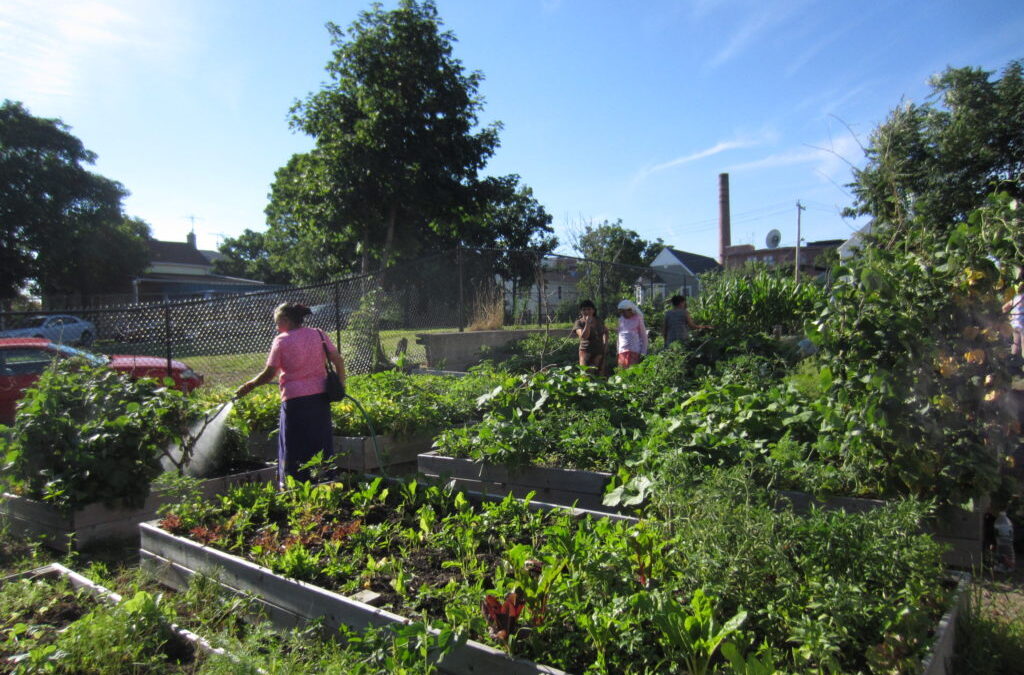
Across Providence, dozens of community gardens have offered residents more than just a place to grow food. Putting down roots in South Providence in 1981 with a single community garden, Southside Community Land Trust (SCLT) has grown into a vibrant network of 58 gardens across Rhode Island. In 2023, they organized programs benefitting over 23,000 people and grew over 67,000 pounds of food that nourished our neighbors. But their impact cannot be measured with numbers alone.
Council members past and present have appreciated firsthand how SCLT has transformed neglected lots into thriving gardens that are now fixtures of our neighborhoods. Not only do these gardens offer culturally familiar food to all who need it, they are hands-on learning opportunities for young people and a self-sustaining solution to flooding issues. From celebrating their thirty years of service to helping them secure a 20-year lease of a city-owned lot, the Council has been a long-time supporter of SCLT.
“It’s been a godsend to have help from Council members to make use of underutilized land in Providence,” said Rochelle Lee, President of the Board of Directors of SCLT. “The City Council has been our partner since day one, supporting our mission to give folks healthy food, garden access, and job training at no cost.”
Under the leadership of Council President Rachel Miller, the Council has worked to strengthen its relationship with SCLT. In the city’s 2023 budget, the Council approved $45,000 of federal funds to improve gardens located on Potters Avenue with fences, irrigation systems, and paths. Later in 2023, SCLT finalized work on 404 Broad Street—a building complex where they sell produce to local business and lease retail space to restaurants. In early 2024, Councilwoman Mary Kay Harris worked with Senator Tiara Mack and Representative Jose Batista to ensure that this new development could operate with tax exempt status. Meanwhile, Councilor Miguel Sanchez advocates to extend SCLT’s leases of six city-owned lots on Manton Avenue by ten years.
“Southside Community Land Trust is a shining example of community-driven organizing that makes Providence a better place to live,” said Councilwoman Mary Kay Harris. “Children, adults, and elders all play their parts to help run these community gardens and grow the food that is needed in our communities.”
As we look forward to another year of service to the people of Providence, the Council will continue to prioritize easy access to basic needs, from healthy food to affordable housing, environmental justice to quality education for our young people.
by Council Staff | Nov 20, 2024 | Blog, Rachel Miller
Stepping up to a microphone in front of elected officials can be daunting task. Whether the public is speaking out about the need for affordable housing or flooding in our neighborhoods, Providence City Council members need to be available to residents. In our city of neighborhoods, it’s pivotal we’re aware about the broad range of concerns that are unique to any given block, park, or school. When the public spoke out about sound and acoustic issues making it difficult to hear and be heard in the Council Chambers, the Council began taking meaningful steps to address this long-overlooked issue.
“The Council can’t do its job without hearing from the public, so we are working quickly and collaboratively to address the accessibility issues during our meetings,” said Council President Rachel Miller. “Our constituents can now enjoy a Council Chamber that has enhanced accessibility features that welcomes their voices. We will continue to prioritize the needs of our communities in all we do, including with continued improvements in the Chamber.”
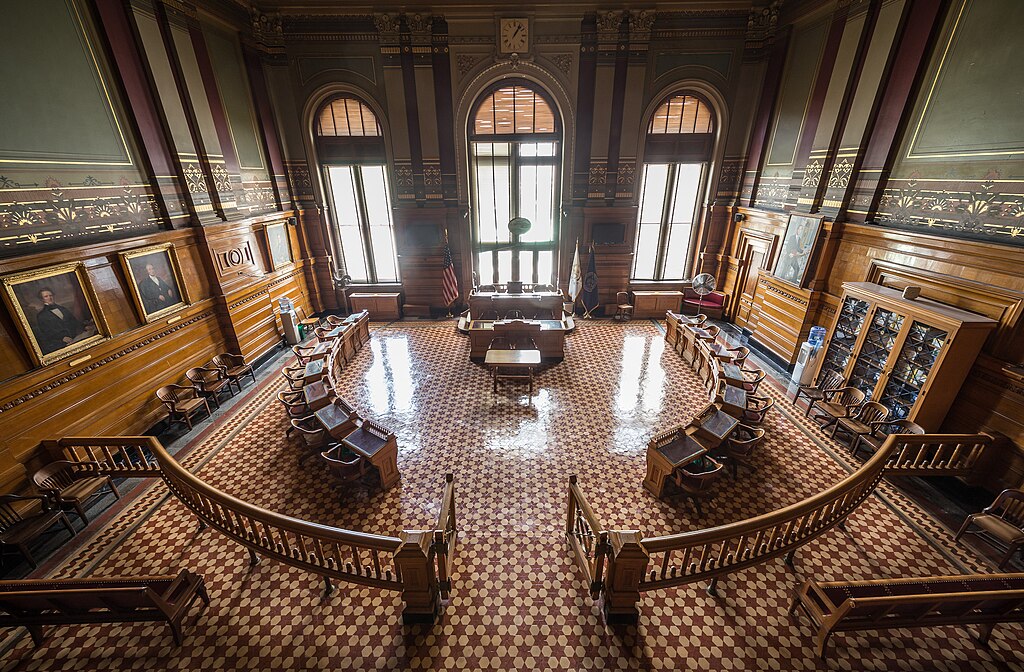
In the 19th century architecture of City Hall, the impressive features such as tall ceilings and intricate tile along the floors contribute significantly to the acoustic issues. Creative solutions are needed, implementing the latest technology available and preserving the historic integrity of the space.
The solutions balance the immediate needs of modern audiences and long-term preservation of the building’s character. Improvements so far have included microphone upgrades, new speakers placed strategically below the balcony, speakers added above the balcony, and soon a beautiful rug to improve the transmission of sound throughout the space. In the long-term, the Council is interested in pursuing future projects that further enhance accessibility such as simultaneous translation, projection of video and votes on screens, and sound dampening measures to help with acoustics.
“Solving problems that have existed since 1878 is a tall task, but none too big for this Council,” said Chief of Staff June Rose. “This Council has taken this challenge on with extraordinary energy—because they know they have no job more sacred than swinging open the doors of government to our community. Improved sound and acoustics in the chamber will make our work more accessible, approachable, modern, and inclusive.”
————————————————-
Solución Acústica en la Cámara del Concejo Histórica
Subirse a un micrófono frente a los funcionarios electos puede ser una tarea desafiante. Ya sea que el público hable sobre la necesidad de viviendas de bajo costo o sobre las inundaciones en nuestros vecindarios, los miembros del Concejo Municipal de Providence deben estar disponibles para los residentes. En nuestra ciudad de vecindarios, es fundamental que estemos al tanto de la amplia gama de preocupaciones que son únicas en cada cuadra, parque o escuela. Cuando el público expresó su preocupación por los problemas de sonido y acústica que dificultaban escuchar y ser escuchado en la Cámara del Concejo, el Concejo comenzó a tomar medidas significativas para enfrentar este problema que se había pasado por alto durante mucho tiempo.
“El Concejo no puede hacer su trabajo sin escuchar al público, por lo que estamos trabajando de manera rápida y colaborativa para enfrentar los problemas de accesibilidad durante nuestras reuniones”, dijo la presidenta del Concejo Rachel Miller. “Nuestros constituyentes ahora pueden disfrutar de una Cámara del Concejo que tiene características mejoradas de accesibilidad y que da la bienvenida a sus voces. Continuaremos priorizando las necesidades de nuestras comunidades en todo lo que hacemos, incluidas las mejoras continuas en la sala.”
En la arquitectura del siglo XIX del Ayuntamiento, características impresionantes como los techos altos y los intrincados azulejos en los pisos contribuyen significativamente a los problemas acústicos. Se necesitan soluciones creativas, implementando la última tecnología disponible y preservando la integridad histórica del espacio.
Las soluciones equilibran las necesidades inmediatas del público moderno y la preservación a largo plazo del carácter del edificio. Las mejoras realizadas hasta ahora incluyen la actualización de micrófonos, nuevos altavoces colocados estratégicamente debajo del balcón, altavoces añadidos encima del balcón y, pronto, una hermosa alfombra para mejorar la transmisión del sonido en todo el espacio. A largo plazo, el Concejo está interesado en llevar a cabo futuros proyectos que mejoren aún más la accesibilidad, como traducción simultánea, proyección de videos y votaciones en pantallas, y medidas de amortiguación del sonido para ayudar con la acústica.
“Resolver problemas que existen desde 1878 es una tarea grande, pero nada demasiado grande para este Concejo”, dijo jefe/a de personal June Rose. “Este Concejo ha asumido este desafío con una energía extraordinaria, porque saben que no tienen un trabajo más sagrado que abrir las puertas del gobierno a nuestra comunidad. Un mejor sonido y acústica en la sala harán que nuestro trabajo sea más accesible, cercano, moderno e inclusivo.